How a Travel Accessories Brand Went from 3 Orders to 247 in Seven Weeks — By Building an AI Content Machine That Never Needed a New Shoot
A travel accessories brand launched on Meta with zero ad history and hit 3 purchases in its first week. Seven weeks later, it was processing 247 orders — not because it had discovered some new audience, but because the creative team had built a systematic AI-assisted content engine that turned a single product shoot into dozens of winning ad variants. Scripts written for existing footage. Canva-built overlays applied to brand's own Instagram reels. Offer angles reworked from the same visual content. When one version of the Compression Backpack creative reached 9x ROAS, that wasn't luck — it was the output of a machine designed to find what the data was actually saying. The lesson: scale doesn't come from more production spend. It comes from more creative intelligence applied to what you already have.
Week one. Eighty people added the product to their cart. Three bought it.
The campaigns were running. The ads were generating clicks. Eighty people had shown enough interest to act. Then the drop-off happened — somewhere between "I want this" and "I'm paying for this" — and 77 of them disappeared.
The creative team looked at the data. The problem wasn't the ad. It wasn't the product. It was what the ad was communicating — and to whom.
A travel accessories brand launching on Meta for the first time has one fundamental creative challenge: nobody in the audience understands what makes your product different from the fifty travel accessories already on Amazon. You cannot fix that problem with more spend. You can only fix it with more angles, more scripts, and more iterations — until the right message lands on the right person at the right moment.
Seven weeks after that three-purchase debut, the same brand processed 247 orders in a single week. Eleven weeks in, ₹78,000 in sales arrived on a single Tuesday. The Compression Backpack — a product that had started with underwhelming conversion numbers — was eventually generating 9x ROAS. Not from a new product, not from a new photoshoot, not from a new audience. From the same footage, reworked with a new offer angle, a new script, a new hook.
The creative machine didn't scale by producing more. It scaled by becoming more intelligent about what it already had.
Services: Meta Ads (Scientific Media Buying), Creative Strategy, AI-Assisted Creative Production, UGC Integration, Script Development, Bundle Strategy
The Problem: A Catalogue Full of Products, Zero Creative Intelligence About Any of Them
When this brand launched on Meta in December 2024, they had something most new D2C brands don't: product proof. Their Ultra Nanofiber Towels were already moving 100+ units a week on Amazon. The compression gear had verified demand. The founder had competitive intelligence showing that compression bags alone do ₹1.5 crore in monthly Amazon sales.
The products were real. The market was real. But none of that translated into a creative advantage — because none of that told the team what angle would make a cold Meta audience stop scrolling.
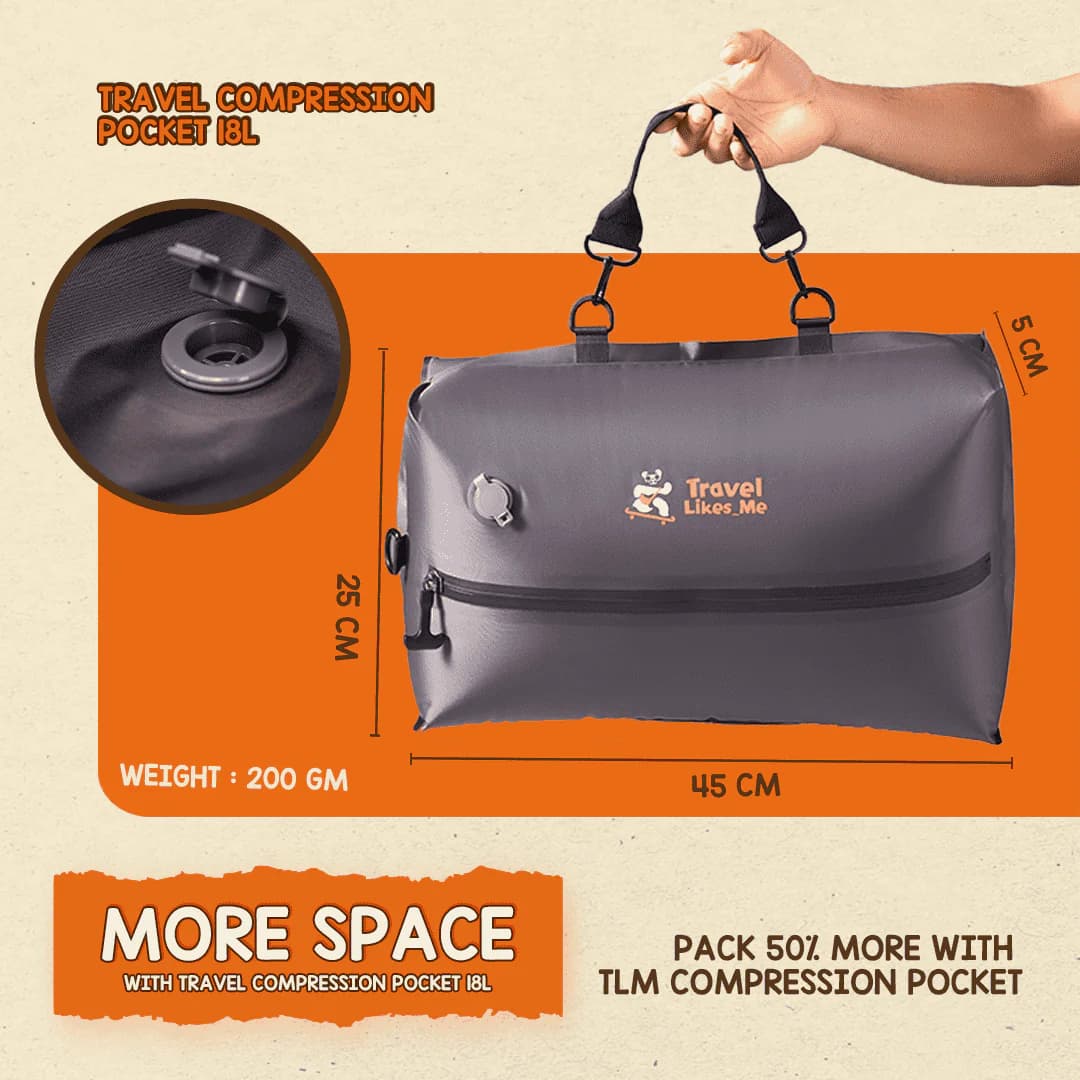
A product that sells well on Amazon because of search intent behaves completely differently on Meta, where the buyer wasn't looking and doesn't yet understand why they need it. The Compression Backpack at ₹7,199 is a considered purchase. A traveler browsing Instagram doesn't know this bag folds to a third of its size, survives airline cabin pressure changes, and compresses a weekend's gear into carry-on dimensions. They see a backpack. They keep scrolling.
The creative team's job wasn't to make a good ad. It was to build a creative system capable of producing enough angles, fast enough, to find the one that made a cold audience stop and understand — before the budget ran out.
Why Standard Creative Production Couldn't Solve This
Three structural realities made the standard "shoot more content, test it, repeat" approach unworkable:
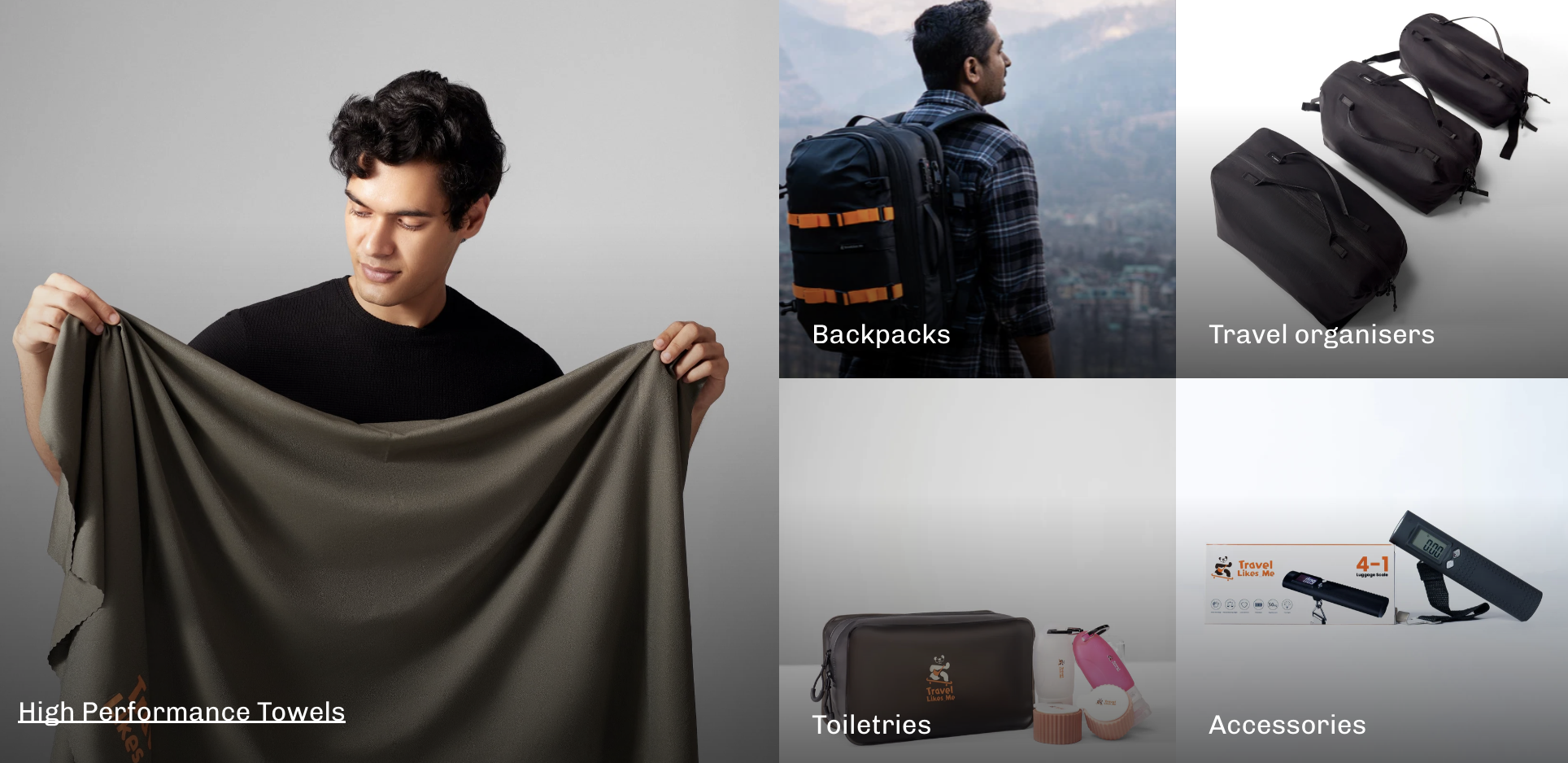
1. The product catalogue was too broad for single-bet creative. Backpacks, towels, compression pockets, water bottles, neck pillows, travel organizers — each product required a different buyer psychology, different hook structures, different information hierarchy. A single high-production video for the Compression Backpack told the team nothing about whether the Nanofiber Towel would land differently with a lifestyle angle versus a demonstration angle. Every product needed its own creative test, and traditional production timelines couldn't keep pace.
2. Early budgets punished slow creative iteration. In a new Meta ad account, a single creative test at controlled spend takes 7–10 days to accumulate readable signal. At ₹5,000–₹10,000/day initial spend across multiple product lines, the cost of getting the first iteration wrong was measured in weeks of lost learning — not just rupees. The creative team needed to generate multiple angles per product simultaneously, not sequentially.
3. The brand's best raw material was already sitting on Instagram. The founder had been building an Instagram presence. Real footage of real products. Travel reels, pack demonstrations, compression tests, material comparisons. None of it had been engineered into paid ad creative. Every week that passed without extracting that footage into testable ad variants was a week of raw creative inventory going unused.
The Solution: An AI-Assisted Content Engine Built on What the Brand Already Owned
Mythos (Creative Advantage):
The core creative philosophy from week one was simple: never wait for a new shoot to produce a new angle. Every product shoot, every Instagram reel the founder published, every piece of brand content was treated as raw creative inventory that could be reworked, rescripted, and retested with a new hook.
The team built their production process around three layers:
Layer 1 — Content Drives. The first action was systematically extracting every piece of usable footage from the brand's existing asset library. The team requested access to organized Google Drive folders for every product category — towels, backpacks, compression gear, accessories. When new shoots happened, the brand shared the raw folders immediately. This created a continuous raw footage pipeline that didn't depend on scheduled production cycles.
Layer 2 — AI-Assisted Scripting. The same visual content was given multiple scripts — each testing a different hook, angle, or offer. Scripts were developed to match specific audience states: "traveler who hates heavy bags" vs. "traveler who pays airline excess baggage" vs. "traveler who compares to Amazon compression bags." AI tools helped generate and iterate scripts rapidly, allowing a single piece of footage to be presented with three to five distinct narrative frames without additional production cost. When the founder shared four Instagram reels in late February as UGC creative input, the team built multiple scripts around each one — same visual content, different explanations of why it mattered to different buyers.
Layer 3 — Canva-Based Rapid Iteration. Text overlays, hook cards, price callouts, offer banners, and benefit claims were built and tested in Canva — enabling the same underlying video to be published as three different ad variants with three different first-three-second experiences. When a Compression Backpack creative needed a new offer angle after the standard lifestyle version plateaued, the team rebuilt it in Canva with a new hook structure rather than reshooting. The result — the "new offer angle" creative — went on to generate 6.5x ROAS on the same product at the same price point.
Sentinel (Scientific Media Buying):
The creative engine was only as useful as the measurement system reading its output. The team ran daily performance tracking against a simple criterion: is this generating purchases at a ROAS above breakeven? If yes, scale and extract more variants from the winning angle. If no, identify which part of the creative chain was failing — the hook, the script, the offer, or the audience fit.
When towel UGC videos hit 3x ROAS in late February, the team immediately requested the raw footage files behind the performing reels to build higher-fidelity variants. When the Compression Backpack "offer angle" variant outperformed the "lifestyle angle" variant by 3x, the team documented the structural difference and applied the same offer-first framework to the Compression Pocket campaign.
The most significant single creative performance event: March 4, Backpack campaigns at 9x ROAS. That wasn't a lucky week — it was the output of eleven weeks of systematic angle testing across the same product, finally finding the script-hook-offer combination that matched the buyer's decision psychology.
The March 11 peak day — ₹78,000 in sales in a single day — coincided with the Holi sale campaign, where urgency creative (last-four-hours countdown variants) built on top of the winning backpack footage produced 8.5x ROAS for the final push. Same footage. New urgency layer. Different result.
Vault (Brand Value Engine):
The creative intelligence fed directly into catalogue and pricing decisions. When the audience feedback mechanism (direct Instagram follower surveys) revealed that 60% were experiencing ad fatigue on backpack feature-heavy content, the team pivoted to lifestyle-first creative for top-of-funnel — shifting the information hierarchy without changing the product. When the founder identified that the Compression Backpack bundle at ₹7,999 had better conversion psychology than the standalone at ₹7,199, the bundle became the primary creative vehicle for scaling spend. When UGC from the brand's Instagram demonstrated real usage scenarios, those reels moved directly into the ad account as warm-audience retargeting — different content for different buyer stages, all sourced from the existing content library.
The Results
Week 1 → Week 7: 3 purchases → 247 orders — 82x growth in weekly order volume in seven weeks, driven entirely by systematic creative angle discovery
Week 7 peak: ₹4,02,150 in weekly revenue at 1.6x ROAS — first sustainable D2C revenue week
March 4: Compression Backpack campaigns — 9x ROAS on winning angle; same product, new script structure from AI-assisted angle iteration
March 11: ₹78,000 single-day sales — largest revenue day in brand history; urgency creative overlay on existing winning footage
March 27: Compression Backpack "new offer angle" creative — 6.5x ROAS for 4 consecutive days; produced from existing footage with AI-scripted offer reframe
March 18 (7-day window): ₹3,07,235 in weekly sales — 20x the week-1 revenue baseline
Ultra Nanofiber Towel: Consistent 2.5–3x ROAS across multiple UGC-based creative variants; large towel UGC video at 3x ROAS within 48 hours of launch
Compression Pocket: 3x ROAS for the last 7 days (March 17 report); immediately became the account's third anchor product after backpack and towel
Overall: ₹0 D2C revenue → ₹10L+/month in approximately three months; brand exited the channel with a verified content-to-purchase creative framework for every major SKU
What Every Travel and Outdoor Accessories Brand Can Learn From This
Your best creative raw material already exists — it's sitting in your Instagram drafts folder. Every product reel your team or founder has published is untested paid creative. Before commissioning a new shoot, audit what you've already created. A UGC video that performed organically with 50,000 views has already pre-validated the visual hook. The only question is which script angle makes the paid version work.
AI-assisted scripting multiplies production leverage without multiplying cost. The same 60-second compression backpack footage can carry five different scripts: feature-focused, problem-focused, offer-focused, comparison-focused, and urgency-focused. Each speaks to a different decision state. Without AI tools accelerating the scripting phase, you test one angle per week. With them, you test five simultaneously — and your winning angle surfaces 5x faster.
The first creative angle is almost never the right one. This brand's Compression Backpack went from early mediocre performance to 9x ROAS — on the same product, at the same price point, in the same account. The change wasn't the product. It was the script. The "offer angle" variant — leading with the deal structure rather than the product features — matched the cold audience's decision psychology in a way the lifestyle angle never did. You find this by testing angles, not by optimizing the one angle you already have.
Urgency creative is a layer, not a campaign. The ₹78K single-day peak came from applying an urgency overlay to an already-proven winning creative — not from building a separate "sale campaign" from scratch. Countdown timers, last-units callouts, and limited-time offer frames built on top of verified purchase creatives amplify what's already working. They do not rescue what isn't.
Founder-sourced audience intelligence is underutilized creative research. When the founder surveyed twenty Instagram followers and learned that 60% were experiencing ad fatigue on feature-heavy backpack content, the creative team had actionable data for the next creative brief within 24 hours. Your closest community is also your fastest focus group. Build the habit of asking.
What Made This Harder Than Expected
The creative iteration cycle competed with Meta's learning phase. Every time a new ad set was launched to test a new script angle, the algorithm needed 7–10 days to optimize delivery. But the creative insights that made the next angle better were only visible after those 7–10 days of spend. The creative engine was always a week ahead of what the data could confirm — requiring judgment calls about which angles to build before the previous round had fully cleared.
Inventory became the creative system's hidden constraint. When Compression Backpack won and ad spend scaled to match, the brand ran into inventory pressure — 50 units left in stock by late October, with new stock 75 days away. Every time a winning product sold out, the campaigns that had taken weeks of angle-testing to optimize had to be paused or redirected. Creative momentum and inventory management had to become synchronized — a coordination that took multiple stockout events to establish.
UGC quality degraded when downloaded from Instagram. When the team pulled the brand's own Instagram reels for use in ad creatives, Instagram's compression reduced video quality below what Meta's placement formats required. The team had to request raw drive files behind each reel rather than downloading from the platform — adding a coordination step that slowed the pipeline until a systematic content drive handoff process was established.
Multiple product lines competed for creative attention. Towels, backpacks, compression pockets, neck pillows, travel organizers — each needed its own creative angle testing. The team had to manage a creative portfolio across concurrent SKU experiments while maintaining depth on the winning products. Spreading creative resources too thin diluted the speed of angle discovery on the highest-potential SKUs.
What the Brand Got Wrong Before Working With Arlox
"Good footage is enough." The brand had real product footage. Real Instagram reels. Real product demonstrations. But footage without a script is an asset without a brief. The same visual content showing a towel packing into a fist can be narrated as "saves you 500g in your bag," "dries in 15 minutes on a Goa beach," or "replaces three hotel towels in your luggage." Each script hits a different buyer motivation. The footage was there. The angle framework wasn't.
"Amazon performance predicts Meta performance." The Compression Backpack was a proven seller on Amazon — search-intent traffic that already knew it needed a travel backpack. On Meta, the same buyer doesn't know they want it yet. The creative challenge is categorically different: not showing the right product to someone searching, but showing the right argument to someone who wasn't looking. Transferring Amazon product confidence directly into Meta creative confidence is one of the most common mistakes established D2C brands make when entering paid social for the first time.
Want results like Travel Likes Me?
Let's Scale Your Brand Next
Book a free strategy call and discover how we can help you hit your next revenue milestone.