How KAFTANIZE Grew from ₹4 Lakh to ₹20 Lakh/Month — By Turning Marketplace Bestseller Data Into Meta Creative Strategy
The brand was already winning everywhere except where it mattered most for D2C growth. KAFTANIZE had 70+ offline stores across 20+ cities in India, a catalogue of 600+ styles, and products performing consistently on Myntra and Nykaa. The D2C website was generating ₹4 lakh a month. Meta advertising was dormant — left in that state by the previous agency. When the activation finally happened in August 2024, the team did something most Meta advertisers never think to do: they opened the Myntra bestseller report before opening the ads manager. Within six weeks, daily website revenue hit ₹37,000. Over three months, monthly revenue grew 5x to ₹20 lakh. The insight that drove it was hiding in the marketplace data the brand had been sitting on all along.
Services: Meta Ads Strategy, Festive Campaign Activation, Marketplace-to-Meta Signal Transfer, Audience Architecture, Creative Angle Development, Catalog Campaign Management
THE PROBLEM
KAFTANIZE entered its Arlox engagement with a paradox that many Indian D2C fashion founders know too well: strong brand presence everywhere except their own website.
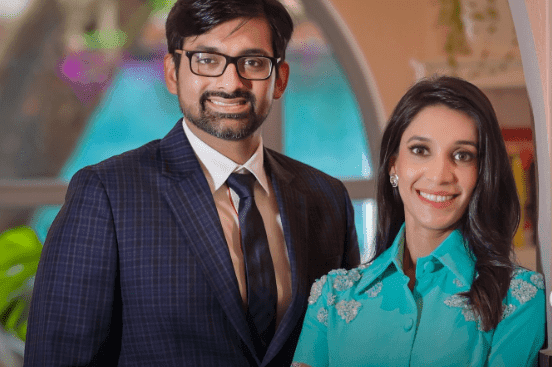
Offline, the brand had built real equity. 70+ stores in 20+ cities. Consistent performance on Myntra and Nykaa. A catalogue that was being restocked and expanded every month — over 100 new SKUs were added in the quarter leading into the festive season. The founder described a business that was growing in fashion markets and with customers who were returning to buy the same styles repeatedly.
The D2C website, at ₹4 lakh a month, was not reflecting any of this momentum.
Meta advertising was the missing activation. The previous agency had handled the account — but left it underperforming, with the founder describing the relationship as too rigid and marked by insufficient communication. A new Meta ad account backup had to be created from scratch because the old agency retained access to the primary account, which the brand needed to reclaim.
The founder's expectations were clear: ROAS of 3.25x to 4x minimum to operate profitably. The ad account had no existing pixel data trained on real buyer behaviour. The festive season — Rakhi, Independence Day, and then the Diwali window — was approaching. The team had weeks, not months, to build the machine before the biggest fashion buying period of the year.
WHY IT WAS HAPPENING
The D2C channel was isolated from what the brand already knew worked. KAFTANIZE had months of real conversion data sitting in two places: the Myntra bestseller report and the Nykaa performance data. Those products — the ones fashion marketplace buyers were actually choosing — had never been used to inform Meta creative strategy. The two channels existed in silos. Meta, when it ran at all, was guessing at what to show buyers. The marketplace data had already answered the question.
Meta had been handed to the previous agency without a strategy for activation. The account was dormant. No trained pixel. No tested angles. No audience architecture built around the actual KAFTANIZE buyer — the fashion-forward Indian woman, from housewife to working professional, who values stylish design at accessible price points. The brand's real customer had never been properly identified in the ad account, so the algorithm had nothing to learn from.
Festive season creative required a proactive system, not a reactive one. India's fashion calendar is driven by festivals. Rakhi, Independence Day, Navratri, Diwali — each creates a distinct buying window with its own emotional register. Without a creative pipeline designed to activate these windows in advance, the brand would spend the best revenue months of the year running generic content or missing the window entirely. The previous agency had left no seasonal infrastructure behind.
The catalogue's depth was an untapped advantage. 600+ active styles across multiple categories — co-ords, Pakistani suits, kaftans, shirts, dresses — gave the Meta algorithm genuine breadth to find buyers. But without structured catalog campaigns and a data feed that excluded out-of-stock products, that depth was either invisible or counterproductive (showing discontinued items to buyers). The catalogue needed to work as a dynamic asset, not a static upload.
THE SOLUTION
Mythos — Creative Advantage:
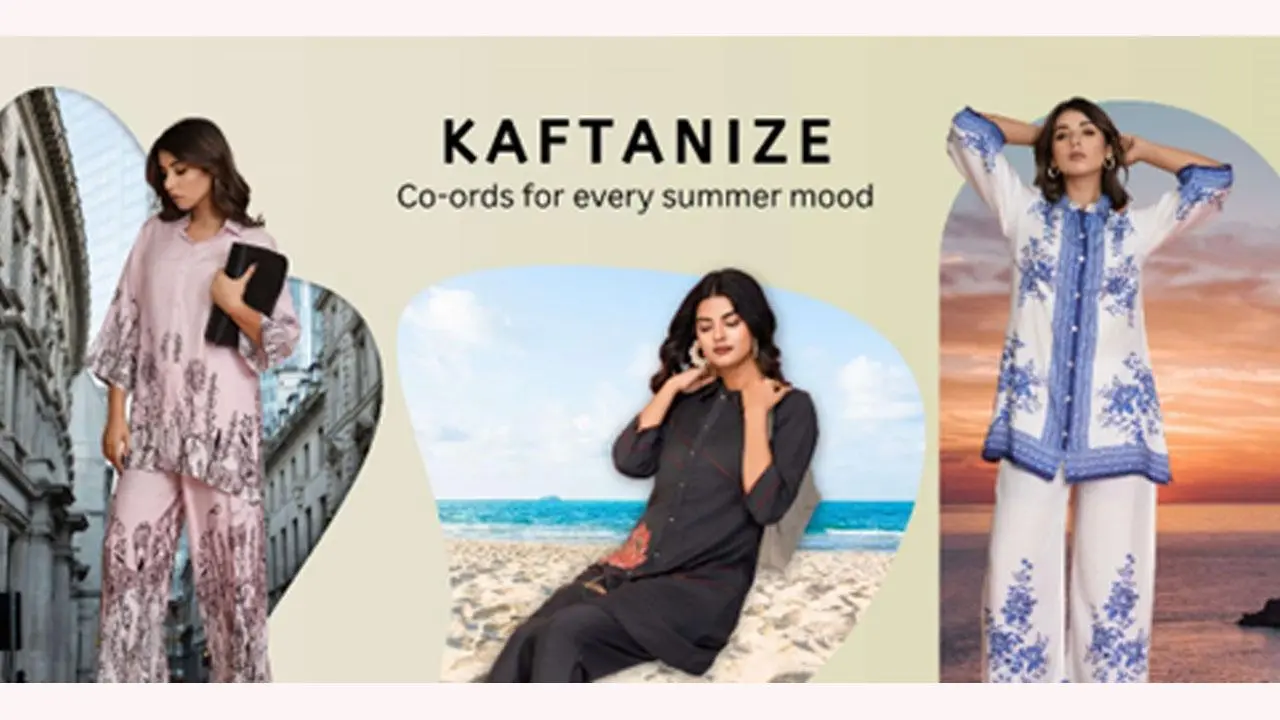
The first priority after onboarding was building a creative strategy around the brand's actual buyer. A detailed customer persona exercise, conducted with the Kaftanize team in the first week, established the core profile: fashion-forward Indian women who range from housewives to independent professionals, prioritise style and affordable pricing, follow fashion influencers, and buy for social occasions and everyday wear. They engage more readily with casual, personal communication — English-first, with openness to Hindi where it creates comfort.
Three foundational creative angles emerged from this process:
Affordability meets designer aesthetic — "designer-style looks at pocket-friendly prices"
Quality and service as differentiators — free two-day delivery, flexible coupon policy, responsive customer support
Social proof through influencer and celebrity collaborations that the brand was actively running
These angles were activated in the first wave of ads, launched in early August. Nine creatives went live simultaneously across the co-ords range and the hero products identified from the drive uploads. The festive calendar was immediately layered on top: Rakhi content went live within days of onboarding, followed by Independence Day activation across Facebook, Instagram Stories, WhatsApp, and email — a coordinated content push that maximised the ₹37k/day revenue mark the team recorded in the final week of August.
When the festive calendar moved into autumn and demand shifted, the team pulled the marketplace data before making any Meta creative decisions. The top 10 performing SKUs from Myntra and Nykaa were extracted and shared with the performance team. New ads featuring those exact products went live the same day the data was shared. This marketplace-to-Meta signal transfer — using what Indian fashion buyers were already choosing on the biggest fashion platforms in the country to tell Meta which products to prioritise — became the core creative intelligence framework for the engagement.
Sentinel — Scientific Media Buying:
The Meta account launched with ₹50,000 in prepaid wallet and a daily budget of ₹20,000, structured around the identified hero products. The team maintained a testing architecture that ran new creatives (including Pakistani suits, SS24 selections, and Myntra bestseller-led ads) in parallel with consolidating budget behind proven performers.
By the third week of August, the team had identified the highest-engaging creative — a specific green co-ord set — performing across multiple audience segments. Rather than rotating it out, the team continued testing it across different angles and audiences to extract maximum learning before any decisions were made about budget reallocation.
The festive-season ROAS of 2.25x (tracked during the Rakhi period) was treated as a baseline for optimisation, not a ceiling. As budget scaled toward ₹30,000 per day through August, the team held the line on testing cadence — culling underperforming ad sets, excluding out-of-stock SKUs from the catalog feed, and introducing retargeting campaigns targeting the 2,300 add-to-cart events recorded in the first 30 days of full campaign activity.
The catalog campaign structure — built around KAFTANIZE's deep product range — allowed the algorithm to dynamically match the right product to the right buyer across 600+ active styles. This was the same structural advantage that drove the Myntra-to-Meta strategy: when the inventory depth is real and the data signal is clean, the algorithm finds buyers faster than manual creative selection ever could.
Vault — Brand Value Engine:
KAFTANIZE's offline trust infrastructure — 70+ stores, marketplace listings, celebrity and influencer collaborations — gave every Meta ad a foundation of credibility that pure D2C brands spend years building. The creative strategy was built to surface this equity rather than build it from scratch.
The team also identified and addressed conversion friction on the website. A structured product description enhancement was proposed to highlight USPs, fabric details, and occasion-specific utility — turning the browsing experience into a decision-support system for buyers uncertain about size or style. The size chart was updated for clarity. A new SS24 collection landing page (kaftanize.com/collections/ss24-selections) was created specifically for the best-performing products identified from homepage traffic analysis, consolidating the catalogue depth into a curated buying experience.
The brand's WhatsApp AI bot system — already handling 300-350 customer inquiries per month and converting approximately 30-40 orders — was preserved as a retention asset. The performance team's recommendation to remove it was overruled by the founder's data: it was generating real orders and reducing customer anxiety during the return and exchange process.
THE RESULTS
₹4 lakh/month → ₹20 lakh/month — D2C website revenue grew 5x over the three-month engagement
₹37,000/day in website revenue achieved by the final week of August — six weeks after campaign launch
2,300 add-to-cart events recorded in the first 30 days of full campaign operation
370 Meta-attributed purchases generated in the first full campaign month
₹20,000–₹30,000/day Meta spend scaled through August as performance signals consolidated
Rakhi festive campaign ROAS: approximately 2.25x — strong performance during the peak festive window
Marketplace-to-Meta signal transfer executed within 24 hours of Myntra/Nykaa bestseller data being shared
9 new ad creatives live at the time of initial launch; expanded to 30+ across co-ords, Pakistani suits, shirts, and Myntra bestseller collections over the engagement
LESSONS FOR SIMILAR BRANDS
"Our marketplace data and our Meta strategy are separate functions." They should not be. The products converting on Myntra or Nykaa are validated purchase decisions made by Indian fashion buyers — the same buyers your Meta campaigns are targeting. If a style is in your top 10 on a major marketplace, that signal is already confirmed. Build your Meta creative around it rather than testing from scratch. KAFTANIZE's fastest creative wins in the engagement came directly from the Nykaa and Myntra bestseller lists, not from internal assumptions about what would work in ads.
"The festive season is a calendar event — we'll plan for it when it arrives." The brands that win in Q3 and Q4 started their festive creative pipeline in July. Rakhi, Independence Day, Navratri, and Diwali are not surprises. Each window requires content, offer mechanics, and audience warmth built up in advance. The Rakhi activation at KAFTANIZE delivered the engagement's strongest single-period ROAS precisely because the content was ready before the buying intent peaked. Reactive festive campaigns — built after the window has opened — chase buyers who have already decided.
"A deep catalogue is too complicated to manage in Meta." It is the opposite. For fashion brands with 100+ SKUs and genuine product breadth, the Meta algorithm's ability to match the right product to the right buyer is a structural advantage over single-product or narrow-range brands. A clean catalog feed, well-structured product data, and an Advantage+ catalog campaign architecture give the algorithm something to work with. At KAFTANIZE, the 600+ active style catalogue was the foundation of the campaign structure — and when catalog campaigns ran with clean data (excluding out-of-stock SKUs), they consistently outperformed manually selected product ads.
CHALLENGES WE FACED
The Meta credit line application remained unresolved for the entire engagement. KAFTANIZE's Meta account operated on a prepaid wallet structure, which created an operational constraint: daily fund additions were required to keep campaigns running, and there was a prepaid limit above which new funds could not be added. The team raised multiple tickets with Facebook across different accounts and escalated directly to their finance team, but the credit line was never activated during the engagement period. This created friction on days when the founder was unavailable and risked campaign delivery interruptions.
Festive marketplace competition directly affected D2C Meta performance during September. From September 27, India's largest fashion marketplaces launched their biggest annual sales events. The founder flagged this intelligence to the team directly: "majority of the online buyers will be heading towards these offers and discounts." With large marketplaces offering aggressive discounts, some Meta traffic that would normally have converted on the D2C website was redirected. The team responded by pulling back on budget scaling and refocusing on ROAS stabilisation rather than acquisition volume during the overlap period.
Out-of-stock products in the live catalog required active management. Several products in the running ad catalog were discontinued mid-engagement due to manufacturing constraints or inventory depletion. Discontinuing them from the catalog carried a risk of resetting the learning phase across active campaigns, requiring the team to manage out-of-stock exclusions carefully in future catalog sets rather than removing them from existing live campaigns.
BELIEFS CHANGED
"Meta is for discovery — brands with offline presence and marketplace listings don't need it." The assumption at the start of the engagement was that KAFTANIZE's offline and marketplace distribution meant D2C growth would require a fundamentally different channel. In practice, Meta's catalog algorithm performed best precisely because of the brand's existing product depth and consumer familiarity. Buyers who already knew KAFTANIZE from a store or a Myntra listing converted faster on Meta than cold audience campaigns — the brand recognition was doing the trust-building work that new brands pay weeks of pixel training to achieve.
"Performance marketing means ads — it has nothing to do with marketplace strategy." The Myntra-to-Meta signal transfer approach reframed this entirely. When the top 10 Myntra SKUs were loaded into Meta creatives, the products that had already proven themselves to Indian fashion buyers began outperforming internal estimates. The two channels were running independently. Connecting them — using marketplace conversion signals as creative intelligence — changed the creative selection process from guesswork to data-led decisions.
Want results like Kaftanize?
Let's Scale Your Brand Next
Book a free strategy call and discover how we can help you hit your next revenue milestone.