How THIS IS US Built Its First Global Audience — and Hit 4.4X ROAS Across the UK, the US, and Nigeria in the Same Month
Beautiful product. Clear mission. Real buyers already in the world. And no paid advertising system that had ever been built to find them. When the co-founder of THIS IS US described her marketing situation in January 2024, she chose one word: unsatisfied. The brand had been making sales — but only to people who already knew it existed. "We have not succeeded in reaching past our immediate and adjacent circle." Within four months of engagement, 46 orders were coming from Nigeria alone in a single month — 23 of them first-time customers — while buyers in California, New York, England, and Sweden were finding THIS IS US without being told to look. Monthly online store revenue climbed to £8,950. ROAS reached 4.4X on a trailing four-day window. And the insight that unlocked Nigeria wasn't what any pre-campaign planning would have predicted.
BRAND SNAPSHOT
Industry: Contemporary African fashion (D2C)
Category: Premium sustainable fashion — Uniform Wear (Live Work Wear), indigo-dyed, handmade; Shokoto, Agbada Dress, Baggy Cargo Trousers, Tetris Line Patch Tee
Geography: London, UK — global distribution (UK, US, Nigeria, Netherlands, Sweden)
Stage: £2,000/month → £8,950/month online store revenue
Services: Meta Ads Strategy, Audience Architecture, Creative Angle Development, Multi-Geography Campaign Management, Lookalike Audience Development
THE PROBLEM
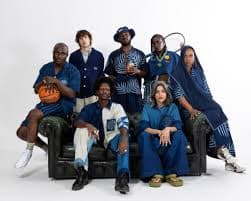
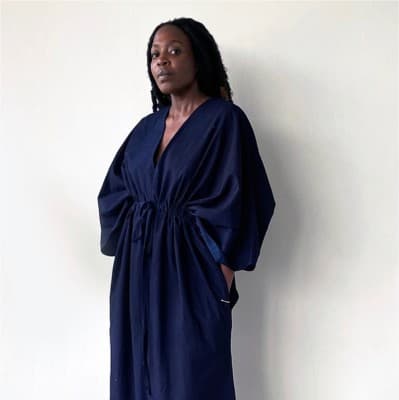
THIS IS US was built on a mission that could not have been clearer: "Elevate Nigerian Design. Be the global benchmark for Contemporary African design — good design, high quality, sustainable and a reflection of our heritage." The products were genuinely original. Handmade. Indigo-dyed. Designed with the specificity of a brand that knew exactly what it was and who it was for.
What hadn't been built was the system to reach anyone beyond the people who already knew the brand existed.
At onboarding in January 2024, the founder Oroma described her feelings in one word: unsatisfied. The elaboration was precise: "We have a great brand and beautiful content but the returns on the efforts towards content creation are quite low. Followership has been very slow to grow and we have not succeeded in reaching past our immediate and adjacent circle."
The goal was equally specific. The target: minimum £20,000/month in revenue within three months, with genuine reach into foreign markets — UK buyers outside the existing circle, US customers, and a return to the Nigerian market the brand's design heritage was rooted in.
The challenge was structural. The business had been set up around Nigerian origins, with a Facebook business manager connected to Nigerian account details. Instagram Shopping — one of the most powerful conversion tools for a visually distinctive fashion brand — was entirely unavailable to accounts registered in African countries. PayPal had permanently closed the brand's account the year before. And when Facebook ads finally launched, the platform imposed a $40/day initial spending limit while it built transaction trust with a new account.
None of these were unique problems. All of them required navigation before the account could function properly. None of them had been addressed.
WHY IT WAS HAPPENING
The advertising infrastructure had never been properly built for global reach. The founder acknowledged in the initiation form that the few times they had run paid ads, they made more than they spent — but they had never tracked performance and had never committed enough budget to see real results. The foundational problem wasn't creative quality or brand positioning. It was that no systematic paid acquisition channel had ever been built and sustained.
Platform-level barriers were actively preventing full activation. Instagram Shopping — unavailable due to the Nigerian account registration — effectively blocked the brand's strongest organic platform from paid placements. Until resolved, ads ran on Facebook only, limiting creative formats and reducing the addressable audience for a brand whose Instagram presence significantly outperformed its Facebook page. The resolution required extended escalation through Facebook business support, UK address verification, and back-and-forth through the commerce manager setup process.
The target audience was genuinely multi-geography and hadn't been segmented as such. THIS IS US had buyers in Nigeria, the UK, and the US responding to different motivations. The Nigerian market was aligned with cultural identity and design heritage. The UK and US markets were purchasing for premium contemporary fashion with a specific provenance. Running undifferentiated global ads without separating these audiences would have compressed performance across all three without optimising for any of them.
Content creation was fragile and intermittently blocked. The brand's creative quality was high, but production depended on a small external team. When the primary content creator was unavailable — due to travel, unavailability, and scheduling gaps — the ad account ran on existing creative without fresh angles to test. For a brand whose conversion rate depended on the freshness and specificity of its visual content, these pauses had a direct and measurable effect on account momentum.
THE SOLUTION
Mythos — Creative Advantage:
The creative strategy began with what the data said. Instagram outperformed Facebook for this brand. The visual identity — handmade, indigo-dyed, distinctly contemporary African — was better matched to Instagram's native vertical format than Facebook's feed. The team built the creative plan around 9:16 vertical reels for Stories and Reels placements, and communicated the aspect ratio requirements clearly: "Best is for new creatives, always send two aspect ratios — 1:1 or 4:5 for Newsfeed and 9:16 for Stories and Reels."
The second finding was less predictable. Among all interest groups tested in the live account, the highest-performing cluster was Nigerian rappers. Not fashion. Not African design. Not sustainable clothing. The cultural alignment between THIS IS US's identity and the audience that engaged most with its content ran through music, not category. The team identified this through live campaign data and adjusted the targeting strategy accordingly.
Product-specific creative strategies were developed around the brand's top converters: Uniform Wear Baggy Cargo Trousers, Uniform Wear Agbada Dress, and Tetris Line Patch Tee. When the content creator pipeline paused, the team provided a clear brief — which products needed video content, which formats performed, and a concrete sourcing path through the Instagram Creator Marketplace. When copy ran off-brand, the correction was immediate. An ad serving fashion products with copy referencing home decor was flagged by the founder within hours: "We can't be pushing fashion and talking about home decor. It's confusing." The team updated it the same day and built a review protocol around brand-consistent copy. The approved language: "Live Work Wear for the Conscious Creative. Elevate your wardrobe with indigo-dyed, handmade contemporary fashion."
Sentinel — Scientific Media Buying:
The account launched under constraint. Facebook's $40/day initial spending limit was a platform trust threshold — not negotiable — and the team communicated this directly rather than presenting performance against an artificially suppressed spend as a learning phase outcome. The priority in the first weeks was accumulating transaction data to clear the spending limit and begin scaling.
Once the ceiling lifted, the team deployed multi-geography simultaneously: UK, US, Nigeria, and Netherlands. The allocation wasn't pre-determined. By May 2024, the data made the case for Nigeria clearly: 46 orders in a single month, 23 of them first-time customers, from only £300 in Nigeria-specific ad spend. The cost-per-acquisition that spend level implied was materially more efficient than what the UK and US campaigns were producing in the same period. Nigeria wasn't the obvious priority market for a London-registered brand with global aspirations. The data said otherwise.
The ROAS trajectory across May captured the account's compounding momentum. The May 5 weekly update tracked the progression exactly: 2.5X over the prior two weeks → 3.5X the previous week → 4.4X in the trailing four days. By July, the overall account ROAS had stabilised above 3X consistently, with the last seven days reliably exceeding 3X. Audience segmentation — separating Nigerian, UK, and US customer bases into distinct stacks with different targeting parameters — had moved the blended account ROAS from 3.0X to 3.4X.
Lookalike audiences were built from the brand's existing Shopify customer list, ensuring cold-audience targeting was seeded from actual buyers rather than interest-based proxies alone.
Vault — Brand Value Engine:
The brand's mission — "Elevate Nigerian Design" — was not a marketing line. It was the actual reason buyers in California and Sweden were purchasing the same product as buyers in Lagos. The design language was specific enough to carry cultural meaning across geography. The quality was high enough to compete in premium markets where price is not the primary driver.
The team treated this identity as the central asset to be amplified, not a creative constraint to work around. When copy deviated from the brand's voice, it was corrected. When the founder provided specific language — "Live Work Wear for the Conscious Creative" — that language became the creative backbone. When Uniform Wear 2.0 launched in February 2024, the ad account was structured to support the collection launch rather than run independently of it.
The geographic spread of performance — Nigeria, UK, US, Netherlands, Sweden all generating orders from a single ad account — was the brand's identity made operational. The vision of "global benchmark for Contemporary African design" wasn't a future state by the end of the engagement. It was already measurable.
THE RESULTS
£2,000/month → £8,950/month — monthly online store revenue growth across the engagement
4.4X ROAS on trailing four-day window — peak ROAS performance, May 2024
4X ROAS overall for May 2024 — £8,950 revenue on £2,031 total ad spend
46 orders from Nigeria in a single month — 23 first-time customers from £300 in Nigerian ad spend
Orders from 5+ geographies — Nigeria (Lagos), UK (England: 23 orders, British Forces: 11 orders), US (California: 9 orders, New York: 7 orders), Netherlands, Sweden
ROAS trajectory within a single month — 2.5X (2-week average) → 3.5X (7-day) → 4.4X (4-day trailing), May 2024
3.5X ROAS sustained in July 2024 — account consistently exceeding 3X over last 7 days
3.4X blended ROAS after audience segmentation across UK, US, and Nigeria
Instagram outperformed Facebook as the primary acquisition platform throughout the engagement
LESSONS FOR SIMILAR BRANDS
"Our best acquisition market is where our price point is highest." Nigeria wasn't the obvious priority for a London-based brand with premium global positioning. But Nigeria drove 46 orders from £300 in ad spend — a cost-per-acquisition the UK and US campaigns couldn't match in the same period. For brands with a specific cultural design heritage, the market most aligned with that identity may be the most efficient acquisition channel early in the paid media journey. Cultural resonance produces conversion rates that geographic targeting in unfamiliar markets takes longer to replicate. The lesson: let the data determine allocation, not assumptions about where premium buyers are.
"Our audience is interested in fashion, so we should target fashion interests." The top-performing interest group in the THIS IS US account wasn't fashion-adjacent. It was Nigerian rappers. No pre-campaign planning would have surfaced this. The data from the live account did. For brands with a specific cultural identity — particularly one that cuts across fashion, music, and heritage — the audience whose behaviour aligns with the creative is often not the audience defined by category interest. Testing reveals this. Assuming the answer in advance forecloses the finding.
"We need to solve the platform problems before we can run properly." Instagram Shopping was unresolved. PayPal was closed. The Facebook spending limit was $40/day. Each of these conditions felt like a prerequisite to real performance. The account launched on February 7, 2024 — within the constraints that existed on that day. The platform issues were worked in parallel, not treated as blockers to launch. By the time the spending limit cleared and Instagram access improved, the pixel had already accumulated real transaction data and the account was compounding toward 4X+ ROAS. Waiting for perfect conditions would have delayed every gain by months.
CHALLENGES WE FACED
Instagram Shopping was unavailable for the early engagement period. The Facebook business manager was associated with Nigerian registration details, and Instagram Shopping is not available to accounts registered in African or Asian countries. The brand's most natural acquisition placement — Instagram Reels and Stories for a visually distinctive product with a strong organic Instagram following — was partially blocked. The team escalated through Facebook support, pursued UK address verification, and worked through the commerce manager setup, but resolution required extended back-and-forth with platform support. During this period, ads ran on Facebook placements only.
The content creation pipeline was intermittently blocked. Creative production depended on a small external team that wasn't consistently available. When the primary creator was out of the country, the pipeline paused. The team provided a detailed brief — specific products, formats, and sourcing paths — to help the brand rebuild the creator relationship faster, but delays between creative iterations had a direct effect on the account's ability to test new angles. Every gap in fresh creative was a gap in account momentum.
Multi-geography budget management created recurring friction. Running simultaneous campaigns across Nigeria, UK, and US, each with different audience costs and different ROAS profiles, meant the total weekly spend could spike unevenly across billing cycles. There were periods where the total charged amount exceeded the founder's understood daily limit — not from a single budget decision, but from the compounding of separate campaigns each billing on their own threshold. Clearer weekly spend summaries broken down by geography would have prevented the tension this created in July and August 2024.
BELIEFS CHANGED
"Reaching a global audience means prioritising markets where purchasing power is highest." California and New York were real markets — 16 orders between them in a single month. But Nigeria drove 46 orders in the same period from a fraction of the spend. The data showed that cultural connection — not market GDP or assumed consumer profile — was the primary driver of early conversion efficiency for this brand. Starting with premium Western markets as the sole priority would have been the intuitive approach. Running Nigeria in parallel and letting the data shape allocation produced a materially different and better answer.
"A brand known for its aesthetic doesn't need copy — just beautiful visuals." When off-brand copy ran alongside product images, conversion suffered and the founder noticed immediately. "We can't be pushing fashion and talking about home decor. It's confusing." The correction demonstrated that for a brand whose purchase trigger is cultural identity and design specificity, copy carries as much weight as the visual. Visuals get attention. Copy closes the case. For THIS IS US, the case was: Live Work Wear for the Conscious Creative. Generic copy — or copy pulled from a different category — undermined the visual in every placement it touched.
Want results like This is Us?
Let's Scale Your Brand Next
Book a free strategy call and discover how we can help you hit your next revenue milestone.