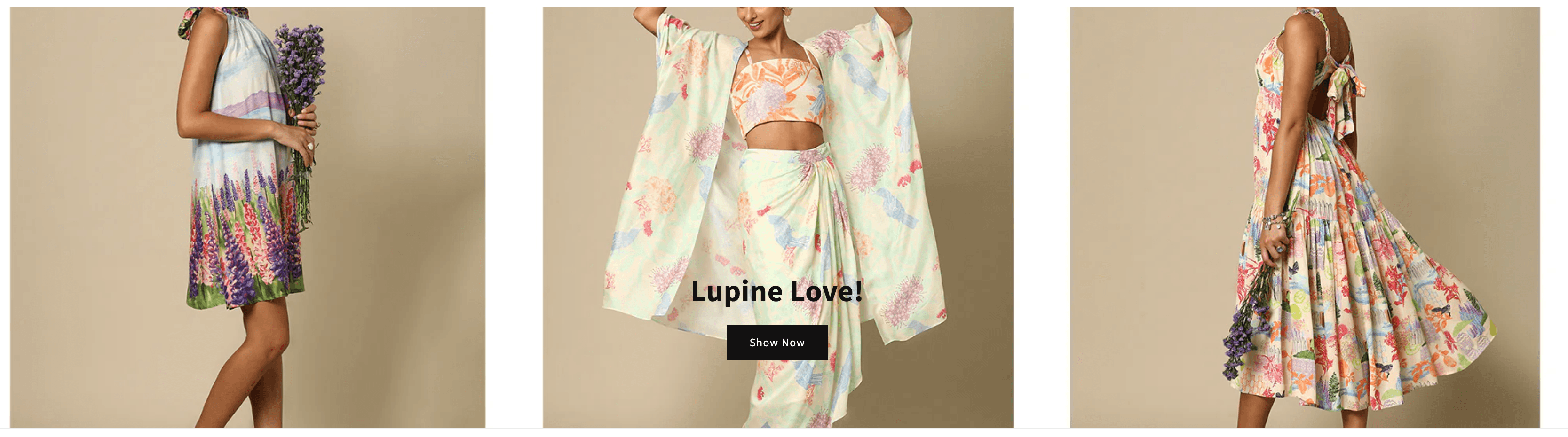
How The Print Pickle Went from Zero Paid Marketing to ₹10 Lakh a Month — Starting with Nothing But Extraordinary Prints and an Untested Audience
The brand had never run a paid ad before. Not a single rupee of Meta spend. No agency. No freelancer. Just a founder with a clear vision — original prints on premium Indian fabrics — and a business that had grown to ₹1 lakh a month through exhibitions, word-of-mouth, and raw hustle.
Swati Chopra, who built The Print Pickle alongside co-founder Bhavesh Goswami, came into her first agency partnership with one word describing her state of mind: "Excited." Not frustrated. Not burned. Not skeptical. Excited — because she hadn't yet been let down by anyone. She was a first-time marketer with a premium product, a genuine aesthetic, and an ambitious destination: a ₹50 crore brand within five years.
What she didn't have was a system. No audience data. No winning creative formats. No understanding of where her buyer lived, what made them click, or what was stopping them from completing a purchase. The product was exceptional. The path to scale was a complete unknown.
Over the following months, The Print Pickle built that system from scratch — testing audiences, discovering what stopped buyers from converting, finding the one creative format that consistently outperformed everything else, and eventually reaching ₹10 lakh a month. The journey wasn't clean or linear. It involved a failed strategy, a round of customer interviews that changed everything, and one unusually persistent breakthrough: a product called Assorted Floral Blue that became the anchor of the entire growth engine.
Services: Meta Ads (Scientific Media Buying), Creative Strategy, Audience Architecture, Website Optimization, Customer Research & Avatar Development
THE PROBLEM
The Print Pickle is built around a singular idea: original prints. Not trends lifted from fast fashion runways. Not digital print-on-demand shortcuts. Original, design-led prints on quality Indian fabrics — sarees from the Mosaic Meadow and Rhythm of Flowers collections, sarongs from the Seaside Splendour line, ready-to-wear cottons for women who want to look distinct in a room full of people wearing the same three patterns everyone else is wearing.
Swati had built ₹1 lakh a month on that idea without spending a rupee on paid ads. Her customers found her organically — at exhibitions, through Instagram, through word of mouth from people who had actually held the fabric. That last detail matters more than it seems.
The challenge with a brand built on the sensory quality of its product is that paid advertising, by nature, can't replicate the experience of touching it. A customer who orders a saree online has to trust the image, the description, and whatever signals of quality they can extract from a reel or a static post. If those signals aren't strong enough, they browse but don't buy. They add to cart but abandon. They order the swatch book to "see the fabric" before committing — and then never commit.
Swati understood that her product's biggest selling point was also her biggest marketing challenge. She came to Arlox not with a broken system, but with no system at all. The mandate was clear: build the growth infrastructure from the ground up, find the right buyers at scale, and prove that a print-focused D2C brand could acquire customers profitably through paid channels.
WHY IT WAS HAPPENING
Building a paid growth system from zero means encountering every fundamental problem at once. For The Print Pickle, three compounding challenges defined the early phase:
1. No audience baseline — and no data to build one from. Brands that have been running ads for months accumulate a critical asset: purchase data. Their pixel has seen who bought, which audiences converted, which creatives worked. The Print Pickle had none of this. Starting with zero ad history meant zero algorithmic signal. Every early campaign was spending money to teach an algorithm that had no prior learning — which meant the first phase would always be expensive and imperfect.
2. The touch-and-feel gap. Print-focused fashion has a purchase barrier that most categories don't. Customers can evaluate whether a pair of jeans fits by looking at a model. They can assess a sneaker's style through a photo. But a saree buyer wants to know: is this cotton breathable in summer? How does the GSM feel against skin? Is it thick enough for winter? These questions can't be answered by a reel — and without answers, shoppers hesitate. Customer research conducted by the team confirmed this directly: "People want to be extremely clear on — is it good for summer or is it good for winters? The price is fair if I can feel the fabric quality."
3. The swatch book hypothesis that needed testing — and disproving. The team's initial instinct was logical: if customers need to feel the fabric before committing, give them the fabric. A free swatch book campaign was launched — a small sample of fabrics sent to prospective buyers to remove the quality-uncertainty barrier. The hypothesis was that swatch book recipients would convert to saree and fabric orders at a high rate. What the data showed instead: people who request a free product are often motivated by the freeness, not by genuine purchase intent. After following up with every swatch book recipient, Swati's team found no meaningful conversion to sales. The campaign was attracting curiosity, not buyers.
Each of these wasn't a mistake — they were the necessary experiments of a brand building its marketing foundation from nothing. But until they were identified and resolved, ad spend was teaching the algorithm the wrong lesson.
THE SOLUTION
Ads went live within ten days of onboarding. The early phase was deliberately methodical: test multiple product categories, test audiences, establish baseline data, and learn before scaling.
Mythos (Creative Advantage): The creative strategy centered on the brand's core strength — the visual distinctiveness of its prints. The team identified early that Instagram placement consistently outperformed Facebook Feed for The Print Pickle, and that video formats showing the texture, drape, and movement of fabric were the highest-engagement format for this product category.
The discovery that defined the entire creative strategy came through systematic testing: the 9:16 vertical video format, paired with Bollywood Lo-Fi music, became the winning formula. When the Assorted Floral Blue product was matched with this format, it consistently outperformed every other creative across all campaigns. The winning creative for this SKU became the anchor — expanded into variations and tested with different music cuts and product angles.
The creative team identified two primary winning products early: Assorted Floral Blue (the top performer across all campaigns) and Assorted Floral White (a close second). Rather than spreading creative budget evenly across the catalog, resources were concentrated on building content depth for these two SKUs — multiple variations, multiple angles, different music treatments — extracting maximum learning and ROAS from the brand's strongest inventory.
Seasonal angles were also developed: a Holi special campaign leveraging the brand's naturally vibrant color palette, with collection-specific products curated for the occasion.
Sentinel (Scientific Media Buying): Campaign architecture was built from scratch with two primary campaign types running in parallel: a Catalog campaign for dynamic product retargeting and a Bottom-of-Funnel (BOF) conversion campaign using the brand's highest-performing creatives. Instagram was selected as the primary placement based on early performance data and Swati's own observation that her Instagram audience had historically been her strongest engagement channel.
COD was configured with a ₹100 charge and a ₹10,000 order value cap to reduce fake and low-intent orders — a structural adjustment that directly improved the quality of purchases flowing through the account.
Customer research, conducted through direct phone calls with buyers and non-buyers, produced the insights that sharpened the entire targeting and messaging strategy. The team discovered that saree customers' top concern was not price — it was convenience. Getting a blouse stitched separately is friction. Fabric customers' top concern was not design — it was confidence about the material: softness, breathability, seasonal suitability. These insights were woven into ad copy and creative direction.
When the swatch book conversion data came back showing no return on investment, the team moved decisively. The strategy was not sentiment — it was evidence. The swatch book campaigns were stopped, and the budget was redirected toward the product ads that were generating actual purchases.
Daily budget discipline was maintained throughout. When Swati identified that spend was running beyond her planned levels, the team recalibrated and established a clear protocol: scale only when ROAS signals justify it, hold the line at ₹3,000–4,000/day until the account's learning phase produced consistent purchase data.
Vault (Brand Value Engine): Hotjar was installed via Google Tag Manager to track on-site behavior and identify drop-off points in the purchase funnel. The subscription popup — which Swati had left active, believing it helped — was removed after the team flagged it as a conversion friction point for new visitors. Website product catalog organization was tightened, with naming conventions updated to prevent duplicate products from appearing incorrectly in catalog ads.
THE RESULTS
₹1,00,000 → ₹10,00,000/month — a 10x revenue scale from zero marketing infrastructure
ROAS progression: 1.12 (first 3 months) → 1.78 (Month 4) → 2.0 → 2.4 — consistent improvement as audience data accumulated and winning products were identified
Best single campaign: 8x ROAS — the Assorted Floral Blue campaign in July 2024
July 1–8 performance: ₹43,000 spend → ₹91,910 revenue → 2.0x ROAS (vs. 1.29x ROAS in the same prior-period comparison)
Swatch book strategy tested and abandoned — customer interview data proved decisive, preventing continued waste on a non-converting channel
Winning creative formula identified: 9:16 vertical video + Bollywood Lo-Fi music for the Assorted Floral category — built into the ongoing creative strategy
Customer avatar defined: direct buyer interviews produced actionable insights about the fabric purchase barrier, seasonal confusion, and saree convenience hesitation — informing both ad creative and website copy
COD quality improved: ₹100 charge + ₹10K cap reduced fake orders from organic and paid traffic
The founder who came in "Excited" at ₹1 lakh a month — with a vision for a ₹50 crore brand and zero paid marketing experience — had a complete growth infrastructure: winning products identified, creative formats proven, audience data accumulated, and a conversion engine capable of reaching ₹10 lakh a month.
LESSONS FOR SIMILAR BRANDS
Starting from zero data is a phase, not a problem. Brands that have never run paid ads before have no shortcut to audience learning — but they also have no bad habits, no damaged pixel history, and no burned creative bank. The right approach is to treat the first three months as infrastructure-building: test broadly, identify winning SKUs, establish the creative format that works, and then concentrate spend behind what the data proves.
If your product requires touch-and-feel, your creative strategy needs to compensate. For fabric-based or textile brands, the absence of physical sensation in digital advertising is the single biggest purchase barrier. Video that shows drape, movement, and texture isn't just better content — it's the only content that addresses the real objection. Pairing this with direct messaging about fabric properties (breathability, weight, seasonal suitability) moves customers past the hesitation that still images cannot.
A plausible strategy that doesn't work should be stopped, not defended. The swatch book campaign made logical sense: remove the fabric-feel barrier by putting fabric in the buyer's hands. The data said it attracted people who wanted free samples, not people who wanted to buy sarees. The right response was to stop immediately and redirect. Continuing to run a strategy after evidence has disproven it is how agencies protect their ideas rather than their clients' budgets.
Winning products deserve concentrated investment. The instinct for most brands is to advertise the full catalog — every product deserves a chance. The data-driven approach is different: find the two or three products that convert at the highest rates, and build the entire creative strategy around them. Assorted Floral Blue wasn't an accident. It was a signal. The right response to a 8x ROAS on one SKU is to create ten variations of that creative, not to reallocate budget to something else.
Customer interviews beat assumptions for fashion brands. The insight that saree customers prioritize convenience (not having to find a blouse tailor) was not discoverable from ad data alone. It required a phone call. Direct conversations with buyers and non-buyers produced specific, actionable intelligence that reshaped the entire targeting and messaging strategy — and would have been impossible to reverse-engineer from click-through rates.
CHALLENGES WE FACED
Learning phase ROAS in the first 3 months. With no prior purchase data, the first three months of campaigns functioned primarily as audience-learning investment. A 1.12 ROAS across March–May 2024 on ₹2.48 lakh of spend was below profitability for the brand — but it was the cost of building the data foundation that produced the 2.0x and 2.4x ROAS in July. Managing the founder's expectations through this phase — and being honest that early ROAS would improve as data accumulated — required consistent communication and transparency.
Budget continuity and scaling tension. Swati had a well-defined view of her ad budget: ₹2,500–3,000/day, clearly communicated. When the team identified opportunities to scale spend to accelerate learning, this created tension. The Arlox team's recommendation to maintain or increase spend during high-momentum periods clashed with Swati's conservative budget comfort zone. The resolution — agreeing on a clear daily cap with explicit conditions for scaling — required multiple calls and direct conversation about the trade-off between spend risk and learning velocity.
Product catalog complexity across collections. The Print Pickle's catalog includes four named collections (Mosaic Meadow, Rhythm of Flowers, Seaside Splendour, and ready-to-wear), plus separate fabric inventory. When catalog ads pulled products by name, items from different collections with similar names were being conflated. This required manual catalog curation — identifying which specific product URLs to include, updating naming conventions to differentiate SKUs, and filtering out-of-stock inventory. The operational overhead was significant in the first few weeks.
Limited video content for winning products. The creative strategy identified early that 9:16 video significantly outperformed static images for this product category. But The Print Pickle's content library was image-heavy — Swati had strong photography but limited video production. This created a bottleneck: the winning format required content the brand didn't have in sufficient volume. The team worked with Swati directly on content briefs, identifying which specific products needed video priority, requesting specific reels, and in some cases using Instagram content directly (with appropriate licensing considerations).
BELIEFS CHANGED
"Paid advertising might not work for a premium print brand — the product is too tactile, too personal." The 9:16 video format for fabric-focused fashion solves for the touch-and-feel barrier better than any other medium available to D2C brands right now. Showing drape, texture, and movement in a 30-second vertical video — with the right music to signal lifestyle and aesthetic — communicates what a product page cannot. The 8x ROAS on the Assorted Floral Blue creative was proof that premium print fashion can scale on Meta.
"A swatch book campaign is the obvious solution to the fabric-feel barrier." The logic was sound. The data was clear: it attracted the wrong people. A strategy that makes intuitive sense and fails to generate results is not a failure of execution — it's information. The decision to stop the campaign and redirect budget was the right call, and it came faster because the team was measuring what mattered: downstream conversion to purchase, not upstream volume of swatch book requests.
"Going from ₹1 lakh to ₹10 lakh requires a miracle or a viral moment." It requires a system. Winning SKUs identified through data. A creative format proven through testing. An audience architecture built on purchase signals. Customer insights that inform copy and targeting. The Print Pickle's trajectory — 1.12x → 1.78x → 2.0x → 2.4x → 8x on one campaign — is not a hockey-stick miracle. It is the compounding effect of getting each variable right, one at a time.
Want results like ThePrintPickle?
Let's Scale Your Brand Next
Book a free strategy call and discover how we can help you hit your next revenue milestone.