How The Drip Co Stopped Advertising Blind — and Built a Profitable ₹10L/Month Engine in 2 Months
The ads were running. The budget was being spent. But the algorithm had no idea anyone was actually buying.
Shubham Dhanawat, the solo founder behind The Drip Co — India's pop-culture rug brand — had scaled to ₹6 lakh a month through sheer hustle and self-teaching. A 3.25x ROAS. Not bad for someone running the whole business alone. But it had a ceiling, and he'd been staring at that ceiling for months.
The problem wasn't the product. The Drip Co's rugs
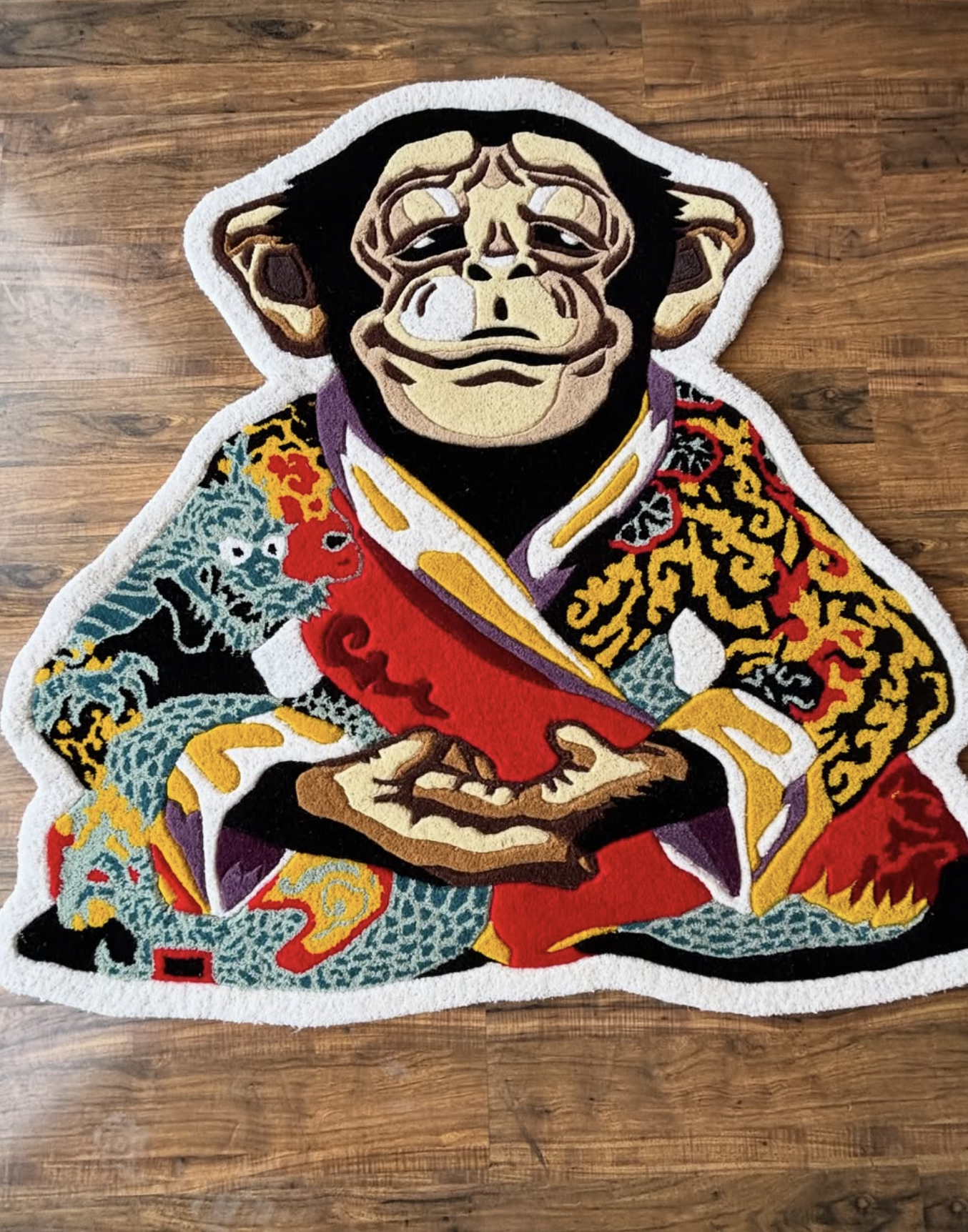
F1 logos, BMW emblems, Netflix-themed prints, shoe replicas woven into handcrafted pieces — had real, passionate buyers. The kind of people who find a rug and send it to ten friends. But the Meta ad account, quietly and invisibly, had been running without its most critical input: purchase event data. The Conversion API wasn't firing. Event coverage: 0%. The algorithm was optimizing on reach, clicks, and checkouts — but completely blind to who was actually completing a purchase.
Month after month, the ROAS plateaued. Growth didn't come. And the previous marketing partner — rather than diagnosing the problem — just kept running ads and falling silent when asked why things weren't working.
Shubham came to Arlox unsatisfied, managing everything himself, and with a clear mandate: make this brand profitable and predictable. Stop the guesswork. Build something that scales.
Two months later, The Drip Co was generating ₹10,00,000 a month. ROAS had climbed from 3.25x to 4.5x in the first tracked week — then 5.06x in the best stretch, with single-day peaks above 10x. The data problem had been fixed. The audience had been cleaned up. And a solo founder had a system he didn't have to babysit.
Geography: India (pan-India D2C, with southern states as highest-AOV market)
Stage: ₹6,00,000/month baseline → ₹10,00,000/month in 2 months
Services: Meta Ads (Scientific Media Buying), Creative Strategy, Conversion API Integration, Audience Architecture, Google Ads Expansion
THE PROBLEM
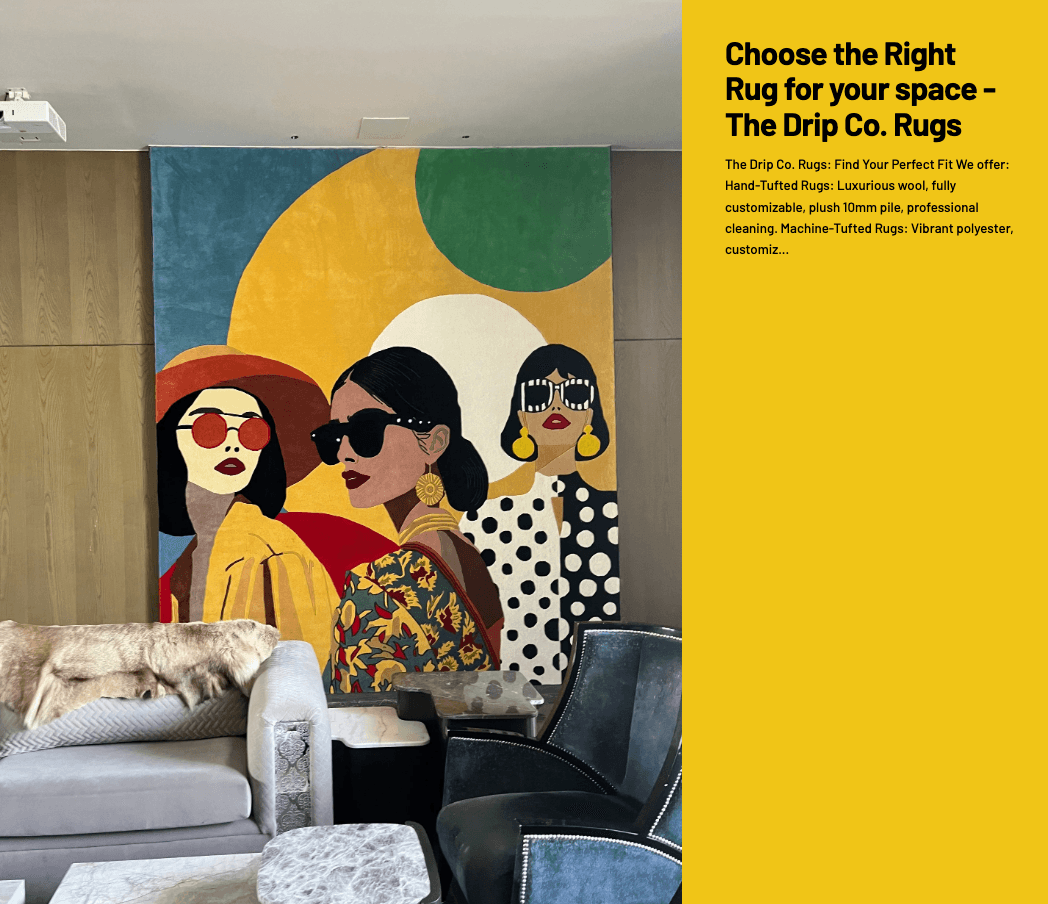
The Drip Co is not a conventional home décor brand. Shubham built it around something specific: rugs that speak to a cultural identity. F1 logos. BMW sports emblems. The "Parental Advisory" graphic from a classic hip-hop cassette cover. A Chunky Dunky sneaker replica in rug form. The brand occupies a space where streetwear culture meets interior design — and its customers are passionate enough to send images of their orders to friends before the package even arrives.
The product had genuine pull. What it didn't have was a growth system.
Shubham had scaled to ₹6L/month by learning on his own — testing, watching what worked, iterating. A 3.25x ROAS was respectable for a self-taught founder managing everything alone. But he couldn't break past it. Revenue growth stalled. Month-over-month progress was inconsistent. And a previous marketing partner, when asked why ads weren't working, had no clear answer. "There is lack of consistency," Shubham noted in his onboarding form, "and at times they are not answerable on why ads are not working." BAU — business-as-usual — was never defined. There was no structured campaign architecture, no clear performance benchmarks, and no accountability when results fell short.
Underneath all of this was a technical problem nobody had caught.
WHY IT WAS HAPPENING
Three compounding failures were keeping the brand from scaling:
1. The algorithm was flying blind. The Drip Co used Breeze as its payment gateway — and Breeze had a critical configuration gap: its Conversion API wasn't correctly sending purchase event data back to Meta. The pixel was firing, but the Conversion API (CAPI) had an event coverage score of 0%. This meant Meta's ad algorithm was optimizing on add-to-carts and initiated checkouts, not on actual purchases. Every rupee spent was teaching the algorithm to find people who browse — not people who buy. No wonder ROAS was plateauing.
2. Manufacturer noise was polluting the audience. Panipat and Bhadohi are two of India's major carpet and rug manufacturing hubs. When The Drip Co ran broad targeting across India, those cities generated significant ad activity — but from factory workers, trade buyers, and industry competitors checking out competitors' products, not from genuine D2C customers. The brand was paying to reach people with zero purchase intent, inflating CPCs and diluting campaign learning.
3. No campaign structure, no learning continuity. The previous marketing setup had no defined architecture separating top-of-funnel awareness from bottom-of-funnel conversion. No product-specific ad sets. No systematic creative testing. Budgets were being added inconsistently, interrupting campaign learning phases and resetting algorithmic momentum each time funds ran out mid-flight.
THE SOLUTION
Arlox launched the first campaigns within 10 days of onboarding. The strategy was explicit from day one: fix the data infrastructure first, then optimize ROAS, then scale revenue.
Mythos (Creative Advantage): The creative strategy leaned into what made The Drip Co's product genuinely extraordinary — the cultural specificity of the designs. Rather than generic home-décor hooks, the team built angles around the emotional identity of the buyer: the person whose home is an extension of their personality, who puts an F1 rug in a home office and a Netflix-themed piece in a gaming room. Advantage+ Video emerged early as the top creative format, generating a 5.7x ROAS in the best weekly tracking period — outperforming static and catalog formats. The team identified that video showing the texture, detail, and "reveal" moment of these rugs was the highest-converting format for this product category, where the craft of the piece is the selling point. A Rakhi gifting angle was developed as a seasonal campaign — positioning premium custom rugs as the statement gift for the occasion. Product-specific creatives were produced for the brand's highest-performing SKUs: the Parental Advisory Rug, the BMW M Sports Logo, and the F1 collection.
Sentinel (Scientific Media Buying): Campaign architecture was rebuilt from the ground up. Two parallel campaign types were launched: a Catalog campaign (for dynamic product retargeting) and a BOF (bottom-of-funnel) conversion campaign using the brand's top-performing historical creatives. Budget started at a controlled level — approximately ₹6,000–8,000/day — with a clear protocol for scaling based on ROAS signals before increasing spend.
Geographic targeting was surgically refined. Panipat and Bhadohi were explicitly excluded from all campaigns, removing the manufacturer noise that had been artificially inflating clicks without driving purchases. Southern Indian states — identified in the onboarding call as delivering higher average order values — were prioritized in audience architecture. Instagram placement, which Shubham noted had historically worked for the brand, was selected as the primary placement over Facebook Feed for most campaigns.
Daily monitoring replaced the sporadic oversight of the previous arrangement. When performance showed variance, the team acted in real time — pausing low-performing legacy campaigns, reallocating budget toward the Advantage+ Video format when it outperformed, and adjusting spend to ₹10K/day when data supported scaling. During festival season (Navratri), a ₹1,000 flat discount on orders above ₹5,000 was activated to maintain conversion velocity during the competitive Big Sale window across major marketplaces.
Vault (Brand Value Engine): The CAPI issue was diagnosed within the first week of onboarding and treated as a critical infrastructure problem. Working directly with the Breeze payment gateway team, Arlox identified that the gateway's reporting settings weren't correctly routing purchase events to Meta's Conversion API. After a multi-week coordination effort involving the founder and the Breeze technical team, the integration was resolved via Stape.io — a server-side tagging solution that correctly captured and deduplicated purchase events. Event coverage score moved from 0% to 100%, and both the pixel and CAPI began firing purchase events with proper deduplication. The moment CAPI was fixed, the algorithm had the signal it needed to optimize for actual buyers.
WhatsApp automation was set up via Brevo — integrating email, WhatsApp, and SMS touchpoints for customer support, abandoned cart recovery, and post-purchase flows. Google Ads was identified as an expansion channel by mid-August, with account access set up and an initial strategy call conducted to parallel the brand's Meta growth.
THE RESULTS
₹6,00,000 → ₹10,00,000/month in 2 months — a 67% revenue increase
ROAS improved from 3.25x → 4.5x in the first tracked week (July 7–13: ₹39,943 spend → ₹1,81,516 in sales)
Best 4-day ROAS: 5.06x (July 18–21: ₹22,768 spend → ₹1,15,200 in sales)
Advantage+ Video Ad: 5.7x ROAS — identified as the top-performing format across all campaigns
Top 5 Product Segment (Age 18–45): 4.8x ROAS sustained across best periods
Single-day peak: ₹70,000+ in gross sales at 10x+ ROAS (August 18)
CAPI event coverage: 0% → 100% — purchase data fully restored, algorithm retrained on actual buyers
Manufacturer noise eliminated — Panipat and Bhadohi exclusions cleaned up audience quality and reduced wasted spend
Google Ads channel opened — second acquisition channel activated, diversifying revenue sources beyond Meta
The founder, who came in describing himself as "Unsatisfied" and running the brand entirely alone, described the trajectory clearly: a minimum target of ₹15L/month at 3.5x+ ROAS. The 2-month foundation — CAPI fixed, audience architecture rebuilt, creative formats identified — is the infrastructure on which that target gets hit.
LESSONS FOR SIMILAR BRANDS
If your ROAS is plateauing, check the data before blaming the creative. The most common culprit isn't the ad — it's a broken signal chain between your payment gateway and Meta's Conversion API. A 0% event coverage score means Meta is optimizing for the wrong behavior. Until that's fixed, increasing budget only accelerates the waste.
Geographic targeting precision matters more for niche categories than for mass-market brands. The Drip Co sells to a specific buyer — someone who wants a BMW rug for their room, not someone browsing home décor broadly. When your product speaks to identity, reaching the wrong 10,000 people (including trade buyers in manufacturing hubs) costs more than it would for a mainstream brand, because those wrong impressions crowd out the right ones.
Product-category niche is not a ceiling — it's a targeting advantage. Pop-culture rugs have a deeply specific buyer profile: age 18–45, strong cultural identity, higher income skew in southern states. That specificity, when used correctly in audience architecture, generates better ROAS than broad targeting — because the product is exactly what the right buyer is looking for.
For solo founders, system > hustle. Shubham had built ₹6L/month through self-teaching and manual effort. The ceiling wasn't effort — it was architecture. A defined campaign structure, daily monitoring, and proper tracking infrastructure is what turns a one-person operation into a scalable brand without burning out the founder.
CHALLENGES WE FACED
CAPI resolution took three weeks of coordination. The Breeze payment gateway issue couldn't be fixed unilaterally — it required the Breeze technical team to adjust settings, followed by test orders to verify the fix, followed by monitoring to confirm event deduplication was working. This compressed the first month's optimization window, since the algorithm couldn't fully train on purchase data until CAPI was live.
Seasonal demand drop in September. The Sharad period — a religious observance when a significant portion of Indian consumers traditionally avoid purchasing new goods — caused a visible sales dip that was not a campaign failure. Shubham identified this pattern himself, having experienced it the previous year. The team responded by reducing daily ad spend to ₹2,000–2,500 during the auspicious period, preserving funds for the Navratri and Diwali scale-up.
Lead quality inconsistency in the custom rug segment. The Drip Co runs a separate custom rug business (made-to-order, 3-week fulfillment) alongside its ready-to-ship catalog. Lead form campaigns for custom orders generated volume, but lead quality was inconsistent — leads from the wrong demographics or with low conversion follow-through. This required ongoing creative and audience refinement throughout the engagement.
Budget continuity challenges. As a solo founder managing operations, content, and sales simultaneously, Shubham experienced periodic delays in replenishing ad account funds — leading to campaign pauses that disrupted learning phases. The team established a 10-day fund replenishment protocol to prevent these disruptions from compounding.
BELIEFS CHANGED
"My previous partner couldn't explain why ads weren't working — so maybe they just can't." The real answer was technical: the Conversion API wasn't firing, so the algorithm had no purchase signal to optimize against. The problem wasn't inexplicable — it was diagnosable. Arlox found it within the first week and worked to resolve it systematically.
"A niche product like this has a small ceiling." Pop-culture rugs are not a mass-market category. But the specificity of the buyer profile — the F1 fan, the sneakerhead, the person who wants their apartment to reflect their taste — is precisely what makes precision targeting effective. Single-day ROAS of 10x+ happened because the right audience was being reached with the right product. The ceiling is higher than it looks from the plateau.
"Running this alone means I have to watch everything myself." Shubham built ₹6L/month by staying closely involved in every decision. The system Arlox built — daily monitoring, weekly performance reviews, proactive campaign adjustments, and structured reporting — gave him back time to focus on the business while the ad account ran with professional oversight.
Want results like TheDripCo?
Let's Scale Your Brand Next
Book a free strategy call and discover how we can help you hit your next revenue milestone.