How The Bohemian Store Turned ₹15L in Revenue Into Profitable Growth — From 2.2x to 3.5x ROAS in 60 Days
Ishani Sarkar was running ₹15 lakh in monthly revenue and still felt like she was losing. Not because the orders weren't coming in. They were. But every rupee she was spending on ads was barely — sometimes not — coming back.
Her ROAS sat at 2.2x. Her breakeven was 2.1x. She was, by any honest calculation, running a marketing engine that was eating itself.
Two previous marketing partners had come before Arlox. Neither had understood what The Bohemian Store actually was: a handcrafted, spiritually rooted accessories brand selling hair crowns, trishul pendants, turquoise healing jewelry, and dreamcatchers to a very specific kind of woman — one who doesn't buy jewelry at a mall, who finds meaning in the moon phases, who connects with the artisan origin of what she wears. Both previous marketers had treated it like a generic accessories brand. The funnels were misaligned. The ROAS was dropping. The team gave no proactive suggestions, no brainstorming, no coordination. Just excuses and silence.
"I feel my current marketer hasn't really understood our market," Ishani wrote in her initiation form. "No real support from the team. No coordination. No proactive suggestions for growth."
She came to Arlox with ₹15 lakhs/month in revenue, a ROAS that barely covered costs, and a brand that deserved better targeting than it had ever received.
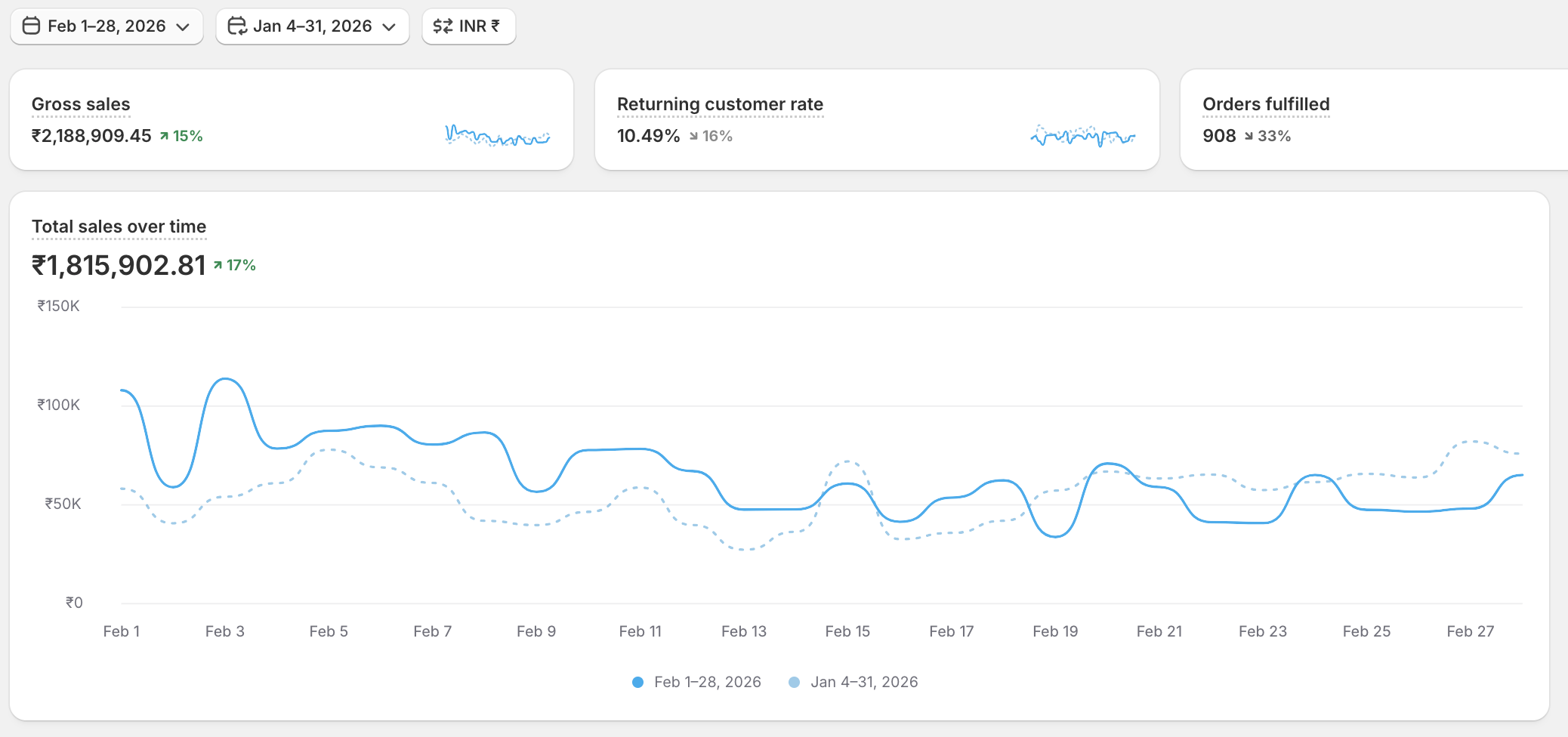
Sixty days later, The Bohemian Store was running at 3.0–3.5x ROAS across Meta and Google — with individual campaigns hitting 4.5x — and monthly revenue had grown to ₹18 lakhs. More importantly: every rupee of ad spend was now working.
Stage: ₹15,00,000/month (barely breakeven) → ₹18,00,000/month at 3.0–3.5x ROAS in 2 months
Services: Meta Ads (Scientific Media Buying), Google Ads, Creative Strategy, Festive Campaign Architecture, Checkout Optimization, Email & Push Automation
THE PROBLEM
The Bohemian Store sells handcrafted accessories to a woman who sees her jewelry as an extension of her identity — not a fashion accessory. Hair crowns for the goddess energy she carries. Trishul pendants for the spiritual anchor she seeks. Turquoise healing stones for the intention she sets. Dreamcatchers for the energy she protects in her home. Every product carries a story.
The brand had genuine demand — ₹15 lakh/month in revenue confirmed that. What it didn't have was a marketing system that respected the specificity of that demand.
Previous marketing efforts had produced declining ROAS. The most recent partner had run generic campaigns with no understanding of the niche. Funnels pointed to the wrong audiences. Creative angles ignored the spiritual and emotional identity of the target buyer. When results didn't come, there were no answers — just stagnation.
Ishani had worked with two agencies before Arlox. The pattern was consistent: high energy at pitch, disappearance post-onboarding, no creativity, no accountability. "I've previously worked with 2 other agencies and they couldn't deliver what they promised," she wrote. "Before and during onboarding everyone gives us high hopes, but while working with them we get more excuses and zero results."
By August 2025, the brand was generating revenue but barely profitable on its ad spend. The ROAS across Meta and Google was 2.2x — essentially at the edge of breakeven. Every month was a gamble.
WHY IT WAS HAPPENING
Three structural failures were compounding:
No niche-aware campaign architecture. Generic D2C playbooks don't work for spiritual accessories. The brand's best-performing products — hair crowns, trishul pendants, brass jewelry, dreamcatchers — each carry a distinct emotional identity that requires its own creative angle and audience targeting. Lumping them into broad campaigns diluted relevance and drove up CPAs. The previous approach had no product-specific ad sets, no segmentation by occasion or identity, and no separation of top-of-funnel and conversion campaigns.
Seasonal opportunity completely untapped. A brand selling spiritual and festive accessories has immense seasonal leverage — Navratri, Diwali, wedding season, gift-giving occasions. None of this was being activated. The brand was running the same generic ads into the most commercially valuable weeks of the Indian festive calendar without a single festive-specific offer, creative, or campaign structure.
Funnel and conversion friction unaddressed. Checkout was not optimized for the brand's buyers. Discount code visibility on product and collection pages was inconsistent. The website's speed was slow enough to create measurable friction. No email or push notification automations were in place to recover abandoned checkouts. Every visitor the brand was paying to bring to the site had a higher chance of leaving without buying than was acceptable.
THE SOLUTION
Arlox launched work immediately on onboarding. The approach was niche-first from day one.
Mythos (Creative Advantage): The team's first step was understanding what the brand's buyers actually respond to — not what generic jewelry buyers respond to. The brand's creative archive (five high-quality professional content pieces from previous production) was reviewed and re-deployed with proper targeting context. New creative briefs were built around the brand's strongest emotional angles: the spiritually grounded woman who sees her accessories as ritual; the gifting occasion (weddings, Diwali, festive moments); the artisan provenance of each piece. Navratri-specific creatives were activated for the festival window, and a dedicated Diwali collection page was built and promoted with a "Buy 3 Get 1 Free + Surprise Free Boho Gift" offer — a campaign designed to stand out against competitors offering flat discounts. A free gift mechanic was identified as consistently outperforming in the brand's creative testing, and this was maintained as a running anchor offer.
Sentinel (Scientific Media Buying): The campaign architecture was rebuilt around the brand's top-performing product categories. Individual ad sets were launched for hair accessories, Shiva jewelry, and the brand's brass collection categories (Cleopatra-inspired, Desert-inspired, New Age). The top 8 revenue-generating products were identified and given dedicated creative support. Daily monitoring replaced the absent check-ins of the previous agency. When the combined Meta + Google ROAS reached 3.0x by end of September, the team maintained discipline — running 80% winning creatives, 20% testing — to avoid disrupting campaign momentum. Budget was scaled systematically: from the initial daily spend to ₹9,000/day, then a 50% scale to ₹14,000/day as ROAS stabilized, eventually reaching ₹18,000/day by December. Competitor audience targeting was implemented, pointing at audiences following niche spiritual accessories brands in the Indian market. A Black Friday campaign was structured in November, and a tiered Christmas/New Year offer (Buy 1 Get 15% Off, Buy 2 Get 20%, Buy 3 Get 25%) was planned for December — building seasonal revenue momentum month over month.
Vault (Brand Value Engine): The checkout and retention infrastructure was addressed systematically. Razorpay Magic Checkout was recommended over the platform Ishani had initially chosen — identified as more effective for conversion uplift, prepaid order percentage improvement, and cost efficiency. Partial COD options were explored to reduce friction for first-time buyers. Brevo was integrated for email and push notification automations, including abandoned checkout sequences. Discount codes were made consistently visible across product and collection pages. Website speed issues were diagnosed (detailed report provided) and a developer recommendation was escalated to address the conversion rate drag from slow load times. When Meta began rejecting high-performing ads — traced to a landing page element that Meta's system flagged — the team identified the root cause within 48 hours, removed the offending element, and restored the ad account health.
THE RESULTS
₹15,00,000 → ₹18,00,000/month in 2 months — 20% revenue growth from a brand already generating scale
ROAS: 2.2x → 3.0–3.5x combined across Meta and Google — moving from barely-breakeven to comfortably profitable
Top campaigns: 4.5x ROAS — individual ad sets demonstrating the ceiling of what's possible with the right creative-audience match
Daily ad spend scaled 100%+ — from initial spend to ₹18,000/day while maintaining ROAS above target
Top 8 revenue products identified — Vee Hair Crown, Phase of Moon Necklace, Life Chakras Long Pendant, Classic Hair Crown, Trishul Pendant, Bohemian Hair Cage Bun, Dream Wreath Capiz Dreamcatcher, Vegan Moon Flora Dreamcatcher — given dedicated creative and budget support
Festive campaign infrastructure built — Navratri, Diwali (Buy 3 Get 1 Free + Surprise Gift), Black Friday, and Christmas campaigns structured and activated for the first time in the brand's history
Email + push automation deployed — abandoned checkout recovery running for the first time
Meta ad account health restored — after external reporting attack was diagnosed and resolved within the campaign window
LESSONS FOR SIMILAR BRANDS
Revenue without profitable ROAS is a ticking clock. The Bohemian Store had ₹15 lakh/month in revenue but 2.2x ROAS — one margin squeeze away from the ads being net-negative. For D2C founders: revenue is not the only number that matters. If your ROAS is below your profitable threshold, scaling revenue only accelerates the problem. Fix the ROAS first, then scale.
Niche brands require niche-aware targeting. Spiritual accessories buyers do not behave like generic fashion buyers. Their purchase triggers are identity-based, occasion-driven, and deeply rooted in specific aesthetic and spiritual values. A campaign targeting "women interested in jewelry" will always underperform a campaign targeting women following spiritual lifestyle content, festival traditions, and artisan craftsmanship communities. The specificity of your brand's audience is an asset — treat it that way.
Festive seasons are where niche D2C brands win — or lose. Navratri, Diwali, and wedding season are not just traffic spikes for a spiritual accessories brand — they are the primary purchase occasions for its core buyer. Running generic ads into these windows is a missed opportunity. Offer-based festive campaigns with dedicated landing pages, curated product selection, and occasion-specific creative can dramatically compress the time between discovery and purchase.
CHALLENGES WE FACED
Meta ad rejection attack. High-performing ads with 4.5x ROAS were flagged and rejected by Meta following what appeared to be coordinated reports from competitors. Two ads were permanently archived. The team diagnosed the root cause — a landing page element that Meta's automated system had flagged — resolved it within 48 hours, and rebuilt account health by pushing a series of new ad approvals through the system. The incident disrupted campaign momentum for approximately 7–10 days.
Website speed drag on conversions. The brand's website was consistently slow, creating friction at the point of purchase. A detailed speed report was generated and shared with the founder. While a developer fix was recommended and a developer contact was provided, the full optimization was dependent on the founder coordinating external development work — introducing timeline variability that affected conversion rates.
Content pipeline dependent on the founder. The brand's creative depended entirely on Ishani producing new videos and product content. During periods of personal commitment (including her own wedding in late November), the pipeline slowed, delaying new ad launches and limiting the team's ability to test new angles during peak festive season.
Post-Diwali traffic dip. A 2–3 day dip in online purchase intent during and immediately after Diwali (a known seasonal pattern in Indian e-commerce) caused temporary revenue fluctuations. Ad spend was optimized down during this window and scaled back up as post-festival traffic recovered.
BELIEFS CHANGED
"Two agencies already failed me — this will be the same." Ishani came in expecting the same cycle: big promises, no follow-through, excuses when ROAS dropped. What she experienced instead was daily monitoring, weekly performance video updates, real-time diagnosis of account health issues, and a team that identified the root cause of ad rejections within 48 hours and fixed them. The framework was: problems get diagnosed, not explained away.
"My niche is too specific for ads to work at scale." The 4.5x ROAS on individual campaigns proved that spiritual and bohemian accessories — when targeted with niche precision — outperform broad categories. The right buyer for The Bohemian Store is not hard to find on Meta. She's just hard to find with generic creative and generic targeting.
"Running ads at breakeven is just how it is in this category." The move from 2.2x to 3.5x ROAS showed that the breakeven-or-worse result was a strategy problem, not a category problem. Spiritual accessories, priced correctly and targeted specifically, can generate meaningfully profitable returns on ad spend.
Want results like The Bohemian Store?
Let's Scale Your Brand Next
Book a free strategy call and discover how we can help you hit your next revenue milestone.

 (opens in a new tab)