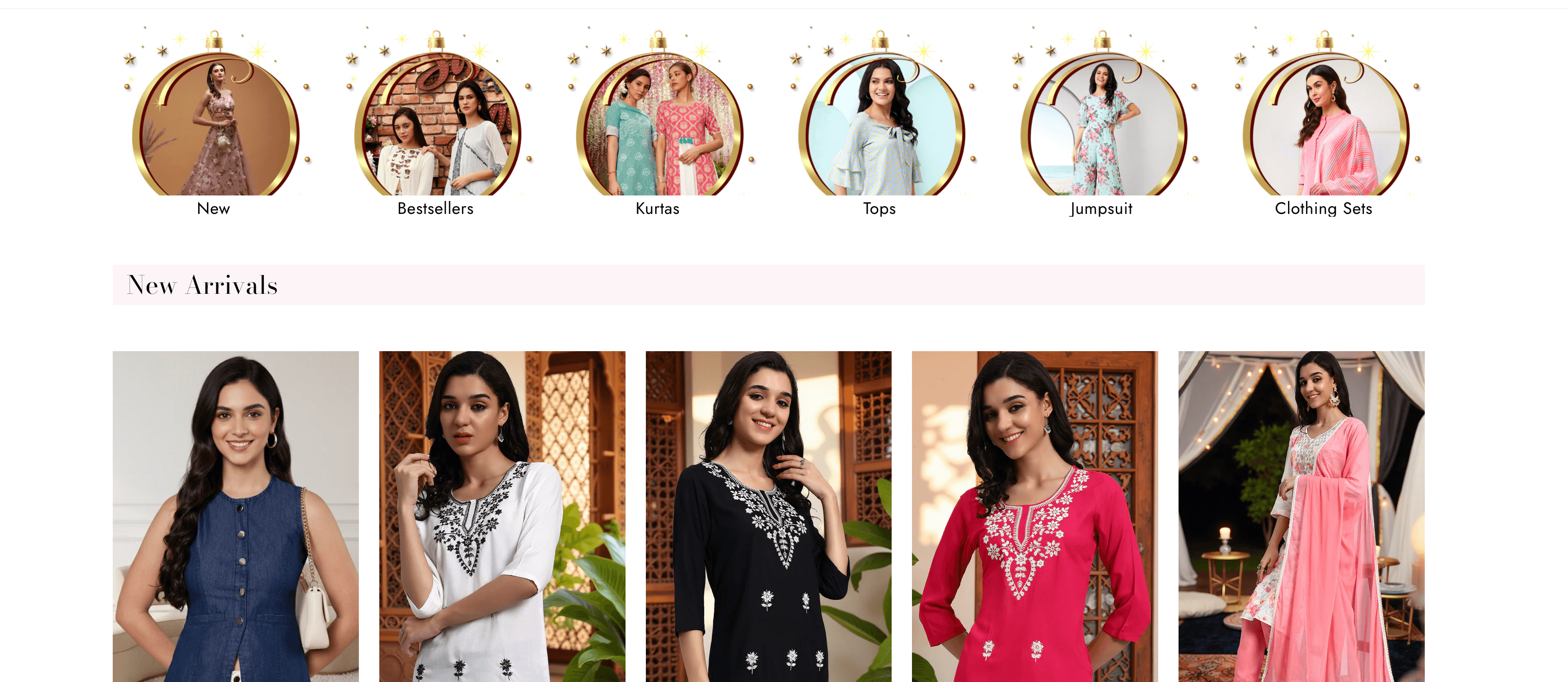
How Pannkh Went from ₹2 Lakh to ₹20 Lakh/Month in 4 Months — A 10x Revenue Unlock for an Indian Fashion Brand That Was Ready to Fly
The brand name meant wings. But the business was grounded.
Pannkh was sitting at ₹2 lakh per month — a D2C fashion brand with a product people wanted, an identity with real equity, and a founder who knew the ceiling wasn't where the numbers said it was. The ads weren't working the way they should. The creative wasn't converting. The revenue was stuck. Four months later, monthly revenue crossed ₹20 lakh. The brand had done what its name always promised — it had finally taken flight.
The unlock didn't require a brand overhaul. It required the right system.
BRAND SNAPSHOT
Industry: Fashion & Apparel (D2C)
Geography: India
Stage: ₹2L/month → ₹20L/month
Timeline: 4 months
Services: Meta Ads Strategy, Creative Angle Development, Scientific Media Buying, Campaign Architecture, Conversion Optimisation, Audience Targeting
THE PROBLEM
At ₹2 lakh per month, Pannkh had cleared the hardest hurdle any D2C brand faces: proof that people want what you're selling. That hurdle is real, and most brands never get over it. The product had buyers. The brand had an identity. The Shopify store was running.
But ₹2 lakh is a ceiling that feels like a floor — just high enough to believe you're moving, just low enough to make growth feel perpetually out of reach. The paid advertising machine wasn't pulling its weight. Spend was going out, but the returns weren't compounding. There was no systematic way to know which creatives were working, which audiences were converting, or where the funnel was leaking.
The brand needed a step-change — not another freelancer running the same ads with different thumbnails, but a full acquisition system built to scale.
WHY IT WAS HAPPENING
The creative wasn't engineered for conversion. Most Indian D2C fashion brands at the ₹2L stage run ads built on aesthetics — beautiful shots, product displays, brand imagery. These build familiarity. They don't reliably build purchase intent. The difference between an ad that looks like a brand and an ad that sells is in the angles: the specific reason a buyer in the scroll buys today, not someday. Without a structured creative testing system — hooks, emotional triggers, format variations, audience-specific messaging — the brand was running the same creative logic in a loop and expecting different returns.
Media buying was reactive, not systematic. At ₹2L/month, most brands are running ads manually — checking results when time allows, scaling budgets on intuition, cutting campaigns when ROAS dips without diagnosing why. This is the single biggest gap between D2C brands that stay at ₹2–5L and brands that break to ₹20L+. Scientific media buying isn't about spending more. It's about knowing why a campaign performs, what to do when it stops, and how to compress the time between identifying a winner and scaling it. Without daily performance monitoring and a structured testing methodology, the gap between ad spend and real returns stays wide.
The funnel had untested leak points. Every path from ad click to purchase is a chain of decisions — landing page, product images, pricing, checkout friction, COD vs. prepaid split, abandoned cart recovery. Any single weak link cuts conversion. At ₹2L/month, there was no framework for diagnosing or fixing these systematically. Money was being spent to bring buyers in through the front door while the back door was quietly letting them leave.
No velocity on creative production. One of the clearest indicators of a brand ready to scale is whether it can generate, test, and iterate creatives faster than its market fatigues them. At ₹2L/month, creative production tends to be slow, expensive, or dependent on one person trying to do everything at once. A brand running 2–3 creatives with no new angles entering the funnel each week is always one creative death cycle away from a revenue drop.
THE SOLUTION
Mythos — Creative Advantage:
The first task was building an angle architecture — a set of creative angles grounded in why Pannkh's buyer actually buys, not just what the product looks like. This means understanding the purchase trigger: the specific moment in a scroll where a prospect's identity, desire, or problem collides with the right ad and produces a purchase.
The team developed multiple creative angles across product lines, testing format variations (static, carousel, short-form video), hook styles (problem-first, aspiration-first, social proof), and audience-specific messaging. Where previous ads were telling buyers what the product was, the new creative system told buyers what the product meant — and what it would mean for them. This is the shift from brand-adjacent advertising to conversion-engineered advertising.
Creative velocity was maintained throughout the engagement. Rather than running winners until fatigue forced a rebuild, the team kept new angles entering the funnel continuously — compressing the cycle time between creative discovery and creative scaling.
Sentinel — Scientific Media Buying:
Campaign architecture was restructured for clarity and control. Top-of-funnel and conversion campaigns were separated with distinct objectives and budget logic. Performance was monitored daily — not to micromanage, but to catch signals fast: which creatives were losing efficiency, which audiences were compressing, when to scale, and when to cut.
The hypothesis-driven methodology meant every budget decision had a reason behind it. When a campaign underperformed, the team diagnosed the specific failure point — creative fatigue, audience saturation, bidding inefficiency — and responded with data rather than intuition. When a campaign showed signs of a winner, budget was moved quickly enough to capture the momentum before the signal weakened.
ROAS was tracked not just as a weekly average but as a daily and campaign-level metric. This granularity is what separates brands that scale from brands that plateau — the ability to see what's happening in near-real time and respond before problems compound.
Vault — Brand Value Engine:
Conversion optimisation ran in parallel with media buying. The team audited the full purchase path — landing page alignment with ad creative, product page trust signals, checkout friction, COD vs. prepaid ratio, and abandoned cart sequences. Each identified leak was addressed systematically.
For a brand at ₹2L/month scaling toward ₹20L, the funnel fixes are often the highest-leverage interventions in the first 30–60 days. Every percentage point of checkout improvement at higher traffic volumes compounds into meaningful revenue. The Vault work ensured that as Sentinel drove more qualified traffic into the funnel, that traffic converted at an efficiency that justified continued scaling.
THE RESULTS
₹2L/month → ₹20L/month — a 10x revenue increase in 4 months
India D2C fashion brand — from stuck at low scale to operating at a genuine growth trajectory
Revenue milestone achieved with a structured, repeatable system rather than a one-time spike
LESSONS FOR SIMILAR BRANDS
"₹2L/month means we're not ready to scale." Wrong framing entirely. ₹2L/month means product-market fit is confirmed. It means buyers exist. What's missing isn't product or market — it's the acquisition system to find those buyers reliably and convert them at scale. The gap between ₹2L and ₹20L is almost never about the product. It's about the engine. Pannkh had the product. The engine is what Arlox built.
"If the ads aren't working, we need better creatives." Partially true, entirely incomplete. Better creatives are necessary but not sufficient. The reason ₹2L brands stay at ₹2L isn't that their creatives are bad — it's that their creatives aren't part of a testing system. One better creative can produce a temporary spike. A creative testing system with 10–20 angles in rotation, daily performance feedback, and a structured iteration process is what produces a ₹20L month. The difference is compounding, not one-time.
"We need to understand why something works before we scale it." The scientific approach to media buying — hypothesis, test, measure, iterate — sounds slow and methodical. In practice, it's what makes scaling fast and safe. Brands that scale on intuition hit a revenue ceiling they can't diagnose. Brands that scale on data know exactly which lever pulled the result, which means they can pull it again. The 4-month timeline on Pannkh's 10x is not an accident. It's the output of a system that knew why each campaign was performing.
"Our brand is fashion — emotion matters more than data." Both are true. The brands that win at scale are the ones that use data to understand emotion — what triggers purchase intent, which creative format creates the strongest emotional response, which product benefit resonates most with which audience. Mythos (the creative pillar) is not anti-data. It uses data to sharpen creative instinct. Pannkh's brand has emotional equity. The system made that equity financially productive.
CHALLENGES WE FACED
Starting with no prior performance data. Brands at ₹2L/month typically have thin ad account histories — not enough purchase data for Meta's algorithm to have strong signals, limited creative test results to learn from, and no clear winning audience to start from. The early weeks required investing in data generation before performance optimisation could take full effect. The team managed this by treating the first 30 days as a structured learning phase with disciplined budget allocation, not a performance phase with ROAS expectations.
Creative supply chain management at low base. At ₹2L/month, brands often don't have a content production system — shoots are ad hoc, asset inventory is thin, and the founder is frequently the primary content source. Building creative velocity when the supply side is constrained requires working with what's available while simultaneously establishing a pipeline for ongoing production. The team worked within the constraint and built toward the system in parallel.
Balancing scaling speed with funnel readiness. The media buying system can generate traffic faster than an under-optimised funnel can convert it. The Vault work on conversion optimisation had to keep pace with Sentinel's media buying — ensuring that increased spend translated into proportional revenue rather than inflating CAC on a leaky funnel. This sequencing is one of the most common scaling errors: brands pour money into acquisition before fixing the conversion path.
BELIEFS CHANGED
"₹20L/month is a future goal, not a near-term target." For brands sitting at ₹2L, ₹20L feels like a different category of business — something that requires more team, more budget, more time, more everything. What Pannkh demonstrated is that the 10x move is primarily a systems problem, not a resource problem. The brand that does ₹20L/month is not categorically different from the brand doing ₹2L/month. It has a better acquisition engine. The engine is buildable in 4 months.
"Paid ads are risky at our scale." This is a belief born from experiences where agencies spent budgets without accountability or a diagnostic framework. When ads are managed scientifically — with daily performance monitoring, structured testing, and clear decision rules for scaling and cutting — the risk profile changes fundamentally. Paid ads at ₹2L/month aren't risky by nature. Unmonitored paid ads with no feedback loop are risky. The difference is the operating system behind the spend.
"The brand needs more awareness before it can scale." Brand awareness at this stage is a proxy for a more fundamental problem: the creative isn't telling the right story to the right buyer. Pannkh's jump to ₹20L didn't come from a brand awareness campaign. It came from ads that hit the specific emotional trigger of the specific buyer who was already looking for what Pannkh sells. Awareness follows conversion. Build the conversion engine first.
Want results like Pannkh?
Let's Scale Your Brand Next
Book a free strategy call and discover how we can help you hit your next revenue milestone.