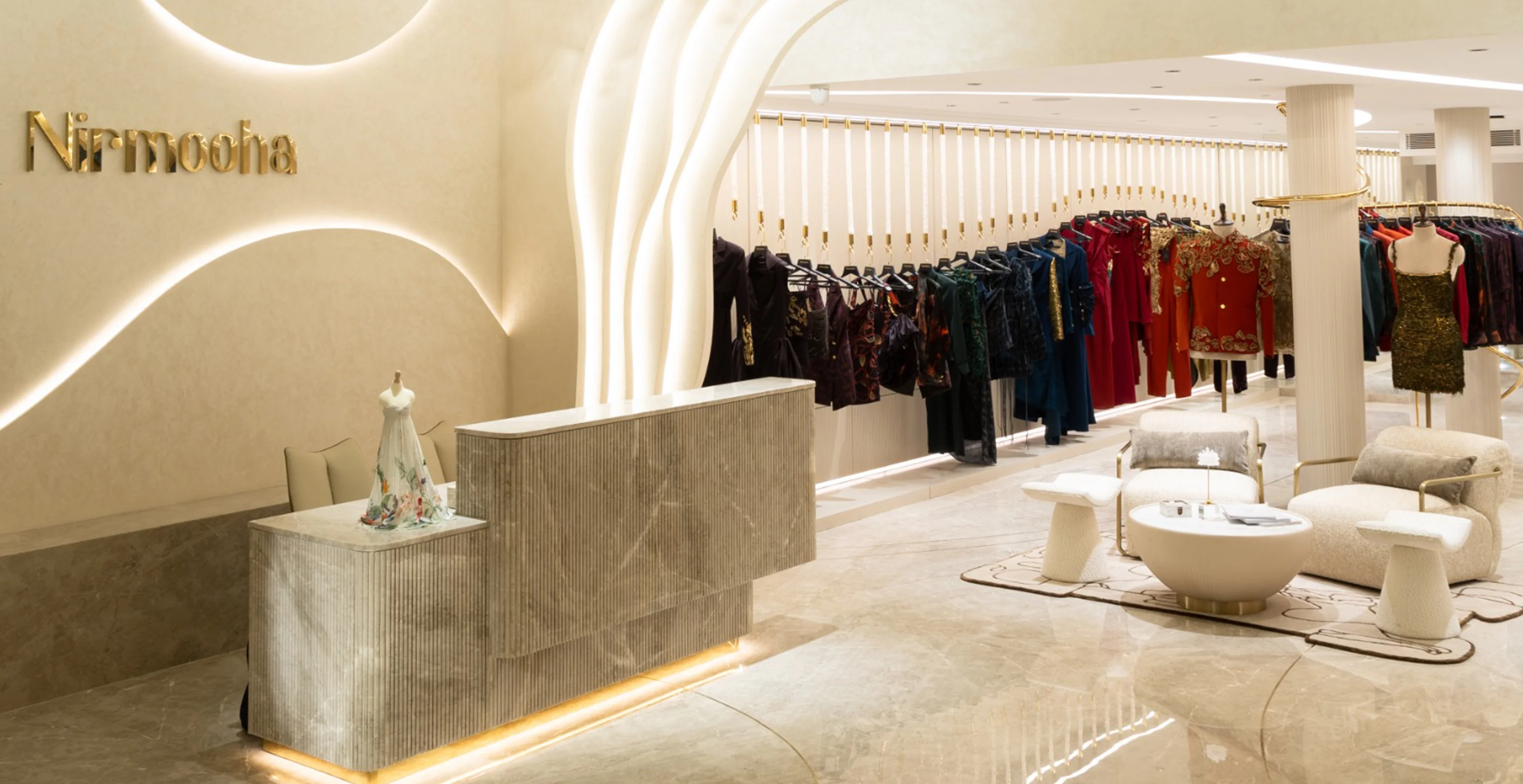
How Nirmooha's Bollywood Creative Assets Finally Went to Work — and Built ₹58,420 in Weekly Meta Revenue in Three Consecutive Weeks
The brand had Bollywood celebrities wearing its clothes. It had a founder with a Master's in Economics and a Black Belt in Six Sigma. It had a product line so premium that the founder refused to put its flagship collection on sale under any circumstances. What it did not have was a marketing partner that acted without being asked. Every time sales dropped, the conversation started the same way — the founder noticed, the founder asked, and the previous partner explained. Nothing changed until she pushed. When Nirmooha came to Arlox in October 2024, the task was not to build from zero. It was to take what already existed — celebrity-associated content sitting idle in the library, a catalog with proven product, and a brand with genuine market credibility — and start running it properly. In three consecutive December weeks, Meta revenue went from ₹22,400 to ₹28,080 to ₹58,420. The consistent winner was not the celebrity content the team expected to lead. It was men's catalog ads.
BRAND SNAPSHOT
Industry: Premium Indian designer fashion — womenswear and menswear
Category: Occasion wear, couture, lifestyle fashion — including the signature Sunshine Meadows collection, Bollywood-endorsed menswear, and bridal/occasion womenswear
Geography: India (nirmooha.in), with international targeting toward Middle East
Stage: ₹2 lakh/month → ₹5 lakh/month
Services: Meta Ads Strategy, Celebrity Creative Activation, Catalog Campaign Architecture, Weekly Performance Reporting, International Audience Targeting, Creative Direction & Copy
THE PROBLEM
Nirmooha is not an unknown brand. Its womenswear has been worn by Bollywood celebrities. Its menswear had been fronted by recognisable faces. The Sunshine Meadows collection carried enough prestige that the founder specifically excluded it from every discount — a 10% New Year offer, a 20% year-end sale, a 25% Valentine's Day campaign — each time, Sunshine Meadows came off the table. This was not a brand without conviction.
It was a brand with a marketing partner that had stopped managing.
The founder described the situation on the initiation form in one word: Unsatisfied. The elaboration was pointed: the previous partner was "not organised" and "didn't have full knowledge of Meta ads to maximise returns." The pattern that had developed was one the founder could feel in real time — "they act when I check and tell them that the traffic has dropped. They should be the one monitoring and making amendments, not the other way."
She did not want to be the account manager of her own agency relationship. She had a Master's degree in Economics and a Black Belt in Six Sigma. She understood data. She did not have time for it. What the brand needed was someone who would apply that rigour proactively — without waiting for her to notice the problem first.
At onboarding, the website was generating approximately ₹2 lakh per month on ₹75,000 in ad spend. The goal she set was clear: 10 lakh per month minimum, with a runway toward 50 lakh and beyond.
WHY IT WAS HAPPENING
The previous partner had no proactive rhythm. When an agency's default posture is to wait for the client to identify problems, the client becomes the account manager. For a founder running product development, inventory, showroom operations, and customer service simultaneously, this model guarantees neglect. Ads run without review. Creative fatigue sets in. Budget is consumed by underperforming campaigns that no one has flagged. The founder's description — "they act when I check" — is the clearest possible diagnosis of a reactive management failure.
Celebrity creative assets were sitting idle. Nirmooha had access to something most Indian D2C fashion brands spend years trying to earn: Bollywood-associated creatives. Menswear fronted by a recognisable Bollywood actor. Womenswear with celebrity associations that any Indian premium brand would price into its media budget. These were not aspirational brand investments — they were existing assets in the library, available for Meta deployment, waiting for a structured test framework. The previous partner had not built one. The brand's single most credible trust signal was underutilised.
Men's and women's campaigns were treated as the same problem. The brand had two distinct buyer profiles — the occasion-wear womenswear buyer and the premium menswear buyer. Without someone actively monitoring which category was responding and reallocating accordingly, both campaigns ran at the same pace regardless of performance signals. The distinction mattered enormously. When men's catalog ads emerged as the consistent weekly winner and women's celebrity ads underperformed across the same periods, the failure to separate them was a direct cost.
There was no structured creative process. The brand had the capability to produce strong content. What was missing was a framework that specified what the first three seconds of an ad needed to do, what copy would drive a sale-period conversion, and which formats — reels, static, catalog — were being tested against which objectives. Without a creative brief, content was produced without direction. With one, every piece had a measurable purpose.
THE SOLUTION
Mythos — Creative Advantage:
The creative strategy for Nirmooha began with a straightforward audit of what already existed. The brand had celebrity-associated content that had never been systematically tested across Meta placements. Menswear content featuring a recognisable Bollywood actor was available. Womenswear content featuring a known celebrity face was in the library. The first step was not to produce new creative — it was to build a structured test framework around what was already there.
The Arlox team developed a formal creative strategy document and walked through it on a call with the brand team. The document specified hooks, CTA structures, and a distinction the brand had never been asked to apply before: hype-building campaigns, where the offer is kept deliberately mysterious to protect premium positioning, versus conversion campaigns, where the offer is explicit and urgency is front-loaded. For the Valentine's Day campaign, the brief was granular — the sale name and dates needed to be visible within the first three seconds; the men's and women's formats required different angles; "guaranteed delivery before Valentine's Day" was the purchase trigger to build around.
When catalog ads began pulling poor-quality images from Shopify — including images the brand had already removed from the store — the team identified the issue immediately, disabled Meta's automatic creative optimisation, and restored the brand's aesthetic integrity. The catalog feed was the foundation of the highest-performing campaign type in the account. It required active management.
When the Valentine's Day creatives arrived without the required hook structure — offer not mentioned, sale name not visible in the first frame — the team flagged it directly and worked through revisions with the brand's content team before approving for launch.
Sentinel — Scientific Media Buying:
The December reporting period established a three-week performance trajectory that captured what active, weekly-cadence management produces versus reactive management.
In the week of December 13–19, Meta revenue was ₹22,400 on ₹41,234 in ad spend — a 54% ROAS. Two orders. Best performer: the menswear Bollywood actor reel and a new dynamic ad. Women's celebrity ads and honeymoon-themed creatives did not convert.
In the week of December 20–26, revenue grew to ₹28,080 on ₹39,335 in spend — ROAS improving to 71% while spend held flat. Two orders. Best performers: men's shirts catalog ads and celebrity content for menswear. The team's assessment: "With Men and Women Celeb ads, we will easily pick up sales to ₹1 lakh/week in the coming week."
In the week of December 27–January 2, revenue jumped to ₹58,420 on ₹46,650 in spend — ROAS clearing 125%. Six orders, up from two in each of the prior two weeks. Best performer: catalog-based ads for menswear. The three-week trajectory — 54% → 71% → 125% ROAS — was not accidental. Each week's report included a "What Worked / What Didn't / How Next Week Will Be Better" structure. The team acted on every finding.
The consistent signal across all three weeks: men's catalog ads outperformed every other format. Not the celebrity content the team had prioritised for activation. Not the New Year offer campaign. The catalog. The budget followed that evidence.
By January 3, the team had set an internal target: minimum ₹8 lakh for the month. The January performance, complicated by the Valentine's campaign setup, would not reach that number — but the December trajectory had established that the account could produce compound weekly improvement under active management.
Saudi Arabia was identified as an international targeting opportunity — an audience with demonstrated interest in the brand's category — and campaigns were structured to begin building that reach alongside India conversion campaigns. Competitor website URL targeting was also deployed for the Valentine's campaign, seeding cold audiences from buyers who had already purchased from comparable premium Indian fashion labels.
Vault — Brand Value Engine:
Nirmooha's Sunshine Meadows collection was excluded from every discount event across the engagement — the 10% New Year offer, the 20% year-end flash sale, the 25% Valentine's Day campaign. Each time, the decision came from the founder and was honoured in the campaign architecture without question. This was not a minor detail. It was the structural logic that keeps a premium fashion brand's positioning intact under promotional pressure: use sale events to drive volume in the broader catalog while protecting the price integrity of the flagship line.
The Valentine's Day campaign was built around the brand's actual positioning — not as a discount-first label, but as one that delivers before the occasion, at quality, on time. "Guaranteed delivery before Valentine's Day" is a brand statement as much as a purchase trigger. It speaks to the buyer who values the experience of gifting a considered piece of Indian couture — not the buyer hunting for the deepest discount. The campaign's creative framework was built around that idea from the first briefing call.
THE RESULTS
₹2 lakh/month → ₹5 lakh/month — monthly revenue doubled across the engagement
₹22,400 → ₹28,080 → ₹58,420 — three consecutive weeks of Meta revenue growth in December 2024
54% → 71% → 125% ROAS — three consecutive weeks of ROAS improvement in December, holding spend roughly flat
6 orders in one week by December 27–January 2, up from 2 orders/week in the two prior weeks
Men's catalog ads the consistent top-performing format across every reporting period in the engagement
Bollywood celebrity menswear reel identified and confirmed as a high-performing creative asset within the first week of deployment
Saudi Arabia audience targeted for international expansion — first structured international campaign activated for inquiry generation
Competitor URL targeting deployed for Valentine's campaign — cold audiences seeded from buyers of comparable premium Indian fashion labels
Weekly structured reporting introduced from week one — "What Worked / What Didn't / How Next Week Will Be Better" — replacing months of silence from the previous marketing relationship
Return rate under 2% — brand already had strong product-delivery fundamentals that supported scaling spend
Want results like NirmohaFashionHouse?
Let's Scale Your Brand Next
Book a free strategy call and discover how we can help you hit your next revenue milestone.