How NatureFab Went from Zero Revenue and No Website to ₹12 Lakh/Month — Building a Bamboo Fashion Brand from Scratch in 5 Months
No website. No Facebook page. No ad account. No pixel data. No orders. Not a single rupee in online revenue.
NatureFab didn't have a slow business — they had no online business at all. Peeyush and Chinky had bamboo fabric clothing they believed in: polo tees, co-ord sets, socks, towels. Products that were genuinely different from what everyone else was selling. But "different" doesn't count for anything when nobody knows you exist.
They had tried to get organized. They knew they needed a system — "The marketing process needs to be organized and systematic with results," Peeyush wrote on the initiation form. But the word he used to describe where they were before Arlox? Disorganized. No structure. No roadmap. No results. Just two founders with a bamboo product and a blank Shopify store.
The ask was simple and enormous: build everything. From zero. And make it work.
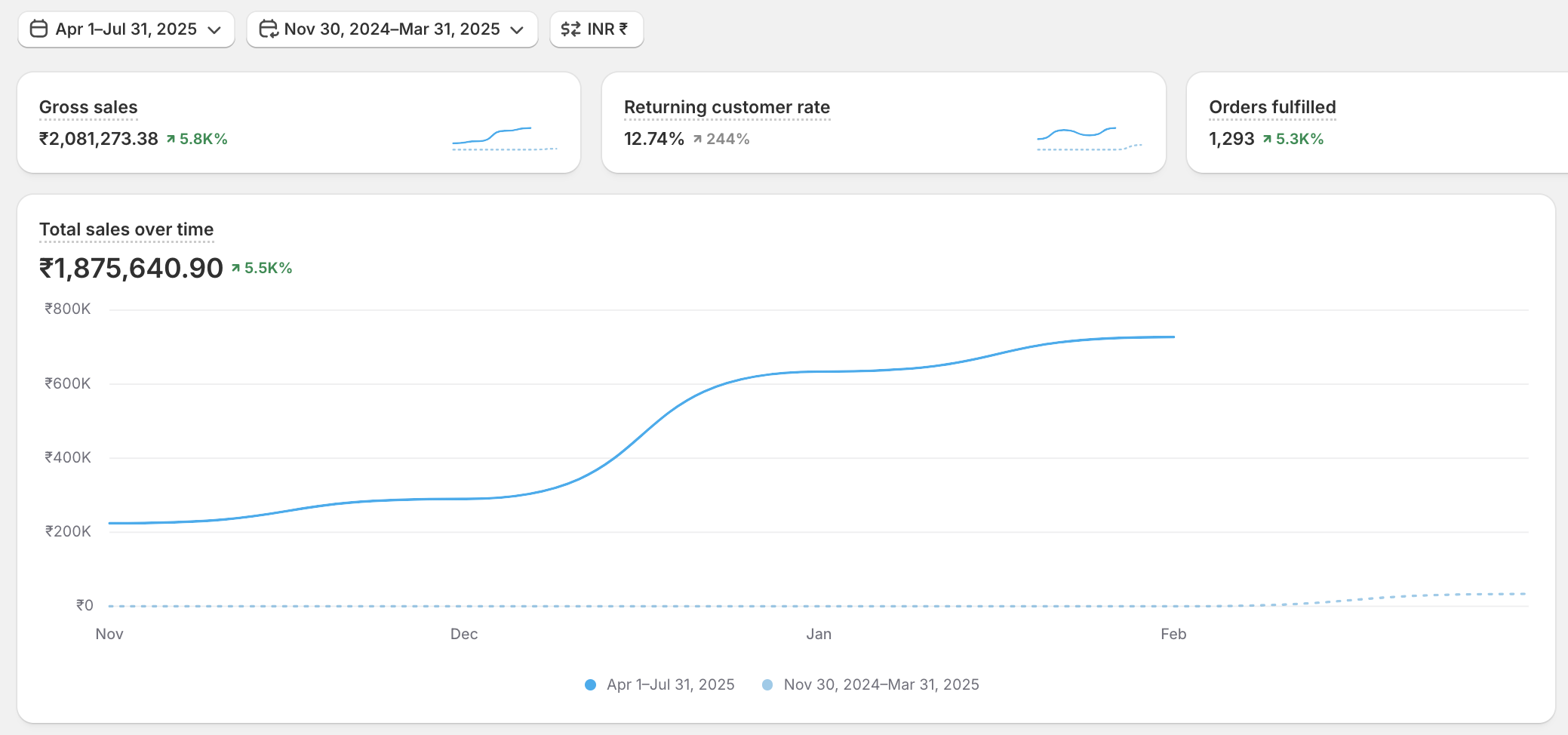
Five months later, NatureFab was generating ₹12 lakh every month — 468 orders in June alone — with a best-week ROAS of 2.17X at ₹90K in ad spend, and individual campaigns hitting 3.27X. From nothing. No prior customer base, no pixel history, no brand recognition.
Geography: India (Delhi/NCR-based, pan-India shipping)
Stage: ₹0/month → ₹12,00,000/month in 5 months
Services: Meta Ads (Scientific Media Buying), Website Build & CRO, Creative Strategy, Pricing Architecture, Conversion API Setup, Razorpay Magic Checkout Integration, PushOwl WhatsApp & Email Marketing, Google Ads Setup
THE PROBLEM
NatureFab is a sustainable D2C fashion brand built around a single material conviction: bamboo fabric is softer, more breathable, and more eco-friendly than what mainstream brands offer. The co-ord sets and polo tees had real product differentiation. But conviction alone doesn't generate orders — and in January 2025, the brand had none.
The founders had no online presence. The website wasn't live. There was no Facebook page, no Meta ad account, no pixel to track anything. The product photography was incomplete — no shoot for socks or towels. When Peeyush visited the Arlox office to walk through the product range, he was burning through a monthly retainer with nothing to show for it except a half-built Shopify store.
And there was another problem quietly sitting inside the catalogue: every product was listed with a ₹1,899 MRP and a ₹899 selling price — a permanent 50-60% discount baked into the product listing. Not a sale. Not a festival offer. Just how it looked, every day, to every visitor. Peeyush noticed it before the ads even went live: "Permanent discount makes the products and the catalogue feel like it's clearance sale and everytime material is on discount."
WHY IT WAS HAPPENING
Three structural failures were compounding:
Zero infrastructure, zero data. A brand-new Meta ad account carries a daily spending limit of ₹125. Not ₹125K — ₹125. The algorithm has nothing to learn from: no purchase events, no pixel history, no audience signals. Every new account starts from scratch, and the growth from ₹125/day to meaningful ad spend is measured in weeks, not days. The founders were paying a retainer before a single ad could run at scale.
Pricing that telegraphed the wrong brand. Products listed at 50-60% permanent discount don't look like premium sustainable fashion — they look like distress inventory. For a brand positioning itself around fabric quality, craftsmanship, and eco-conscious living, the visual price gap was destroying the brand story before the customer reached the product page. No amount of creative work can fix a catalogue that signals "clearance bin."
Missing conversion infrastructure. Beyond the pricing issue, the checkout experience was incomplete. No size chart integration. Payment gateway not optimized. No Razorpay Magic Checkout. No pixel properly firing. When the first campaigns launched, the data would later reveal a recurring pattern: customers adding to cart, initiating checkout, and then disappearing — a funnel that was leaking at the payment step before anyone understood why.
THE SOLUTION
Arlox didn't run ads on day one. The team built the foundation first.
Mythos (Creative Advantage): With no existing brand content to work from, the creative team developed product-specific concepts from scratch — starting with polo tees and socks, then expanding as new product shoots became available. The team produced 2–3 new ad creatives every week, systematically testing angles: static product shots, 9:16 video reels, UGC-style content, and AI-enhanced creatives. When performance data identified the Coffee Bean bamboo T-shirt as a clear anchor product — strong hook metrics, high engagement, consistent click-through — the team doubled down, scaling the winning creative format into new co-ord colours (Granite Green, Mood Indigo, Black). When a new co-ord colour creative launched in July, it immediately delivered 3.27X ROAS at ₹1,611.94 AOV and a 14.08% conversion rate — the team's highest-performing creative to date.
Sentinel (Scientific Media Buying): The campaign architecture was built to survive the constraints of a brand-new account. Structured audience tests ran first — manual interest stacking while the pixel was learning, then expanding to broad campaigns and Advantage+ as purchase data accumulated. When Meta's ₹125/day spending limit throttled early growth, the team coordinated manual prepaid top-ups to gradually unlock higher daily spend, reaching ₹1,500–2,000/day within weeks. Performance was tracked daily — every CPM shift, every drop in conversion rate, every geographic signal. When Hyderabad emerged as a pocket of high-value, high-converting orders, the team built city-specific campaigns to amplify it. When Amazon and Myntra sale periods pushed CPMs up by 20%, the team flagged it in real time and adjusted. The campaign structure evolved from initial product-specific ad sets into a mature architecture of Advantage Shopping campaigns, ABO sets, and cost-controlled scaling campaigns — each optimized for a different phase of the buyer journey.
Vault (Brand Value Engine): The Arlox team conducted a full Loom-recorded website audit within the first weeks, flagging every friction point: missing size charts, incomplete product photography, no sticky add-to-cart, and the pricing architecture problem. The phantom MRP system was replaced with genuine ₹999 pricing and a 10% new customer discount — making the product feel like a considered purchase rather than a permanent sale. Razorpay Magic Checkout was integrated as soon as the platform made it available. When the checkout events stopped firing to Meta after the Magic Checkout upgrade — creating a conversion tracking blackout — the team diagnosed the pixel-to-Razorpay CAPI mismatch, coordinated with Razorpay support, and resolved it. COD fraud was addressed in real time: when fake COD orders appeared (orders placed with no intent to pay), the team recommended disabling COD for orders above ₹1,399. PushOwl was onboarded to build a WhatsApp and email retention channel — giving a 3,400+ subscriber base a systematic way to receive campaign announcements, abandoned cart recovery, and post-purchase flows. Google Ads were also set up to open an additional acquisition channel.
THE RESULTS
What started as an empty Shopify store became a functioning, revenue-generating D2C business in five months.
₹0 → ₹12,00,000/month in 5 months — from no website, no ad account, and no pixel data to a consistent monthly revenue engine
468 orders in June — the brand's strongest month, up from zero in January
Best week (July 21, 2025): ₹1,95,961 in sales on ₹90,172 ad spend — 2.17X ROAS; top campaign at 2.98X ROAS and 6.89% CVR; new coord creative at 3.27X ROAS with 14.08% conversion rate
3.0X ROAS milestone — achieved in September 2025 at ₹12K/day ad spend with ₹35K daily sales; founder response: "These results are very much better and we can definitely scale upwards with this."
Pricing architecture fixed — permanent 50-60% phantom discounts replaced with genuine ₹999 pricing and earned discount structure
COD fraud eliminated — COD restricted to orders below ₹1,399, protecting margins while maintaining conversion option for genuine buyers
Retention channel built — 3,400+ PushOwl subscribers across WhatsApp and email, enabling abandoned cart, browse abandonment, and post-purchase flows from scratch
LESSONS FOR SIMILAR BRANDS
Don't rush a new ad account. A ₹125/day spending limit is painful, but burning through budget before the pixel has purchase data is more painful. Let the algorithm learn on a tight budget, find one or two winning creatives, then scale. A new account needs 4–6 weeks of learning phase before it can spend efficiently. That's not a failure — it's how the platform works.
Pricing optics determine brand perception before the customer reads a single word. If your catalogue shows a 60% permanent discount, you've already told the customer that your "original" price is fiction. Premium sustainable fashion requires genuine pricing — discounts should feel earned and time-bound, not baked into the listing architecture.
Inventory is a campaign killer, and the damage compounds. Every time a winning product goes out of stock, the ads have to re-learn with a different SKU. The pixel history, the audience pools, the algorithm's "knowledge" of who buys that product — all of it gets reset. A brand that runs out of its best seller mid-month doesn't just lose those orders; it loses weeks of algorithm learning that took months to build.
Want results like Naturefab?
Let's Scale Your Brand Next
Book a free strategy call and discover how we can help you hit your next revenue milestone.
 (opens in a new tab)