How Ishara India Grew 24x in 7 Months — By Stopping the Algorithm From Starting Over Every Week
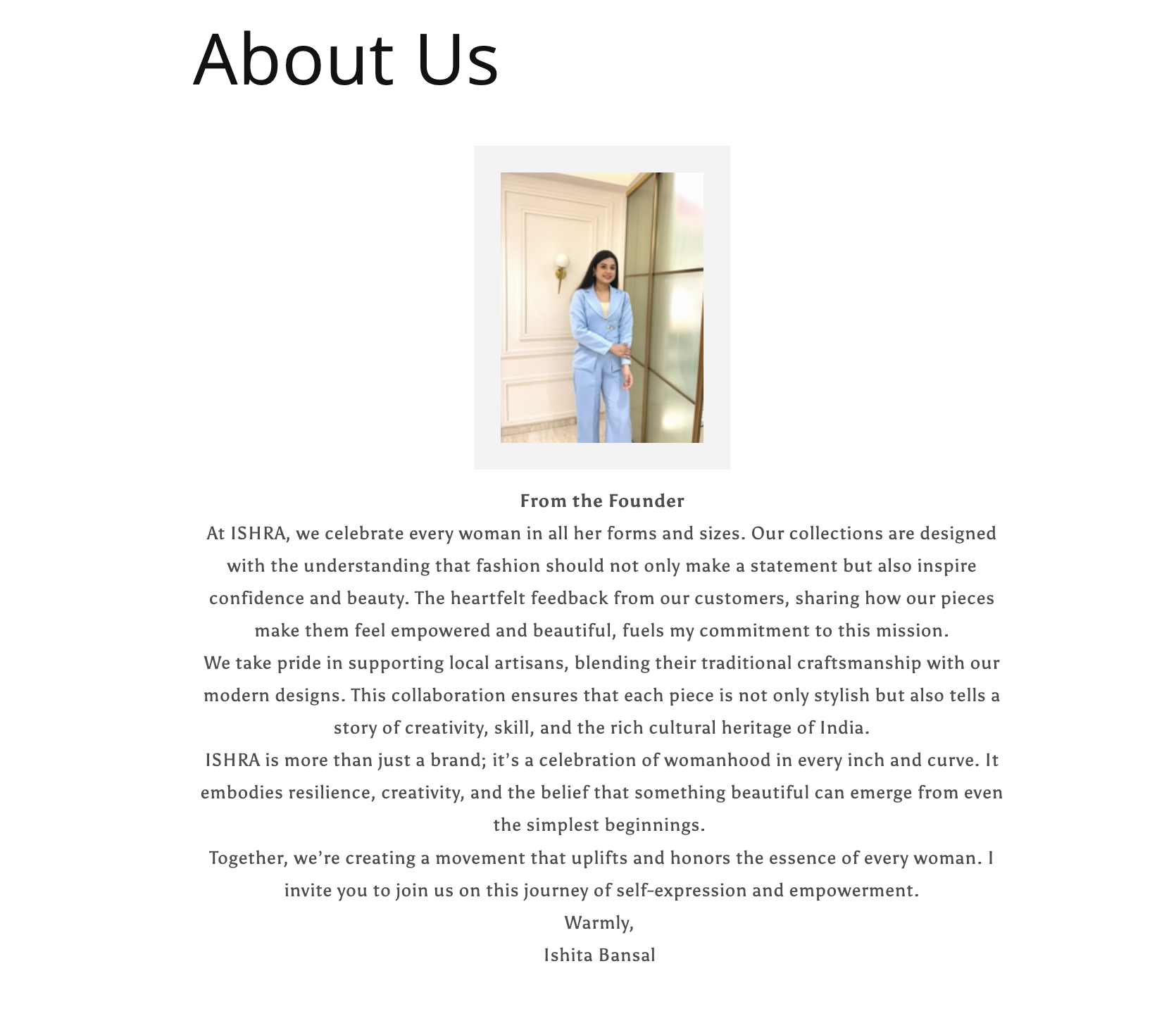
Ishita Bansal wasn't burned out. She wasn't desperate. When she filled out her onboarding form in December 2023, she described her emotional state as one word: curious.
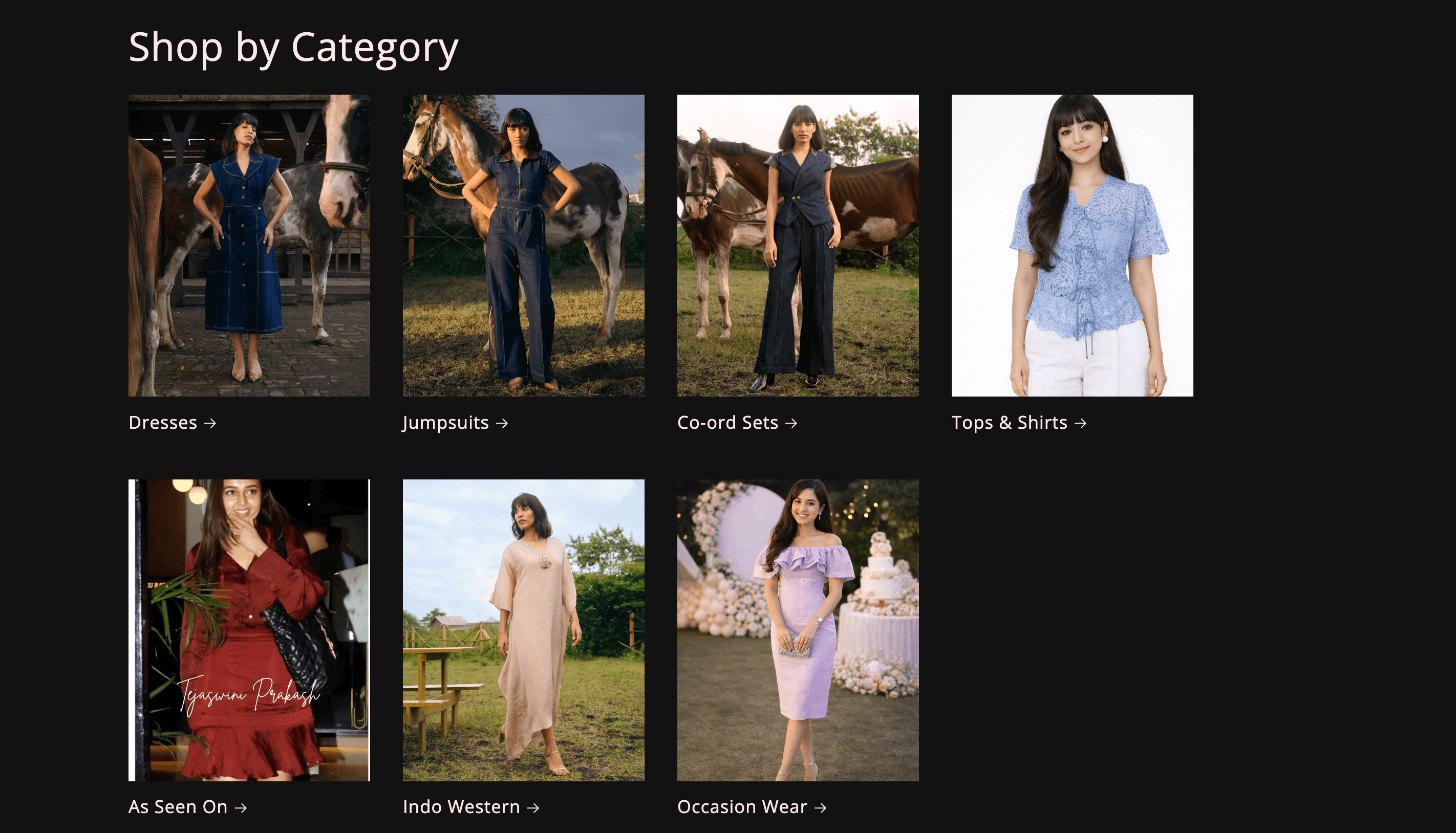
That word tells you everything about what kind of founder she was. She had already built Ishara India to ₹80,000–₹2 lakh a month, entirely on her own, learning Meta ads as she went. She had a ROAS of 4.5x. She had real buyers who loved the brand. She had a vision she could articulate precisely: solids, exclusively. No prints, no patterns. The brand that chose color over noise, luxury at an accessible price point, targeted at women who knew exactly who they were. The product was right. The identity was clear.
What she couldn't figure out was why it wouldn't grow.
She came to Arlox in December 2023 with a clear mandate: make this predictable. Build something that doesn't require me to babysit it every day. Get me to consistent 10–15 orders per day.
Seven months later, Ishara India was generating ₹24 lakh a month.
The reason wasn't one big insight. It was a sequence of diagnoses — some technical, some operational, some creative — that compounded on each other until the algorithm finally had what it needed to run without interruption. Because the central problem with Ishara India wasn't the product. It wasn't the creative. It wasn't even the targeting.
The problem was that the ads kept starting over. Every few days, they'd run out of funds. The algorithm would pause. And when it came back on, it came back as if nothing had been learned.
Geography: India (pan-India D2C, south India as highest-AOV market, metro-city focus)
Stage: ₹80,000–₹2,00,000/month → ₹24,00,000/month in 7 months
Services: Meta Ads (Scientific Media Buying), Creative Strategy, Seasonal Campaign Architecture, Celebrity Content Activation, Audience Architecture, Google Ads Expansion
THE PROBLEM
Ishara India's brand identity was not the problem. Solids — exclusively colors, no prints, no patterns — is a genuinely rare positioning in Indian womenswear. The brand occupies a specific white space: chic, minimal, aspirational but accessible, designed for women who style intuitively and buy intentionally. The product had real pull. Customers responded. ROAS of 4.5x from a self-taught founder running everything alone is not a bad number.
But ₹80,000 to ₹2 lakh a month with no consistent upward trend, for 12+ months, is a sign that the system has a ceiling — not the brand.
Ishita's self-assessment on the onboarding form was pointed: "Failing to drive results consistently." Her Meta ads had been "very intuitive" — trial and error, watching what worked, no structured campaign architecture. There was no separation between awareness and conversion objectives. No systematic creative testing framework. No seasonal content calendar aligned to India's buying cycles. No mechanism to ensure campaign learning phases completed without interruption.
The brand was being managed reactively, not architecturally. And underneath the surface, three compounding problems were actively working against every rupee being spent.
WHY IT WAS HAPPENING
Three issues were stacking on each other — each one individually manageable, but together keeping the brand in a growth ceiling it couldn't see its way out of.
1. The algorithm was resetting itself every few days. This was the core operational drag — and the hardest one to diagnose because it happened slowly. Ishita managed her ad account funds daily, adding ₹12,000 here, ₹5,000 there, as cash allowed. On a day the account ran dry — even for a few hours — Meta paused all running campaigns. And every pause reset the learning phase. Every reset wiped the accumulated purchase signal the algorithm had been building. For a brand at ₹1L/month, this meant that months of optimization were being erased repeatedly by a cash flow habit, not a strategic decision. The algorithm never got to finish learning. The campaigns that should have compounded into consistent daily orders kept rebooting from zero.
2. Fake order attacks and audience contamination were poisoning the pixel. In late January, Ishara India began receiving a pattern of suspicious orders — consecutive, from Delhi, consistently non-genuine. The founder flagged it: "I'm only receiving fake ones." Multiple fake COD placements from the same region were triggering purchase events on the Meta pixel, teaching the algorithm that Delhi-area users were buyers. They weren't. Every fake purchase signal nudged Meta to serve more ads to audiences that matched that fraudulent profile — inflating CPC, wasting budget, and degrading the real buyer signal the algorithm needed to scale.
3. Stale creative and wrong-season ads were training the algorithm on non-buyers. On March 4th, the Arlox team sent a message: "We should stop this ad — dresses for winter." The campaign had been live for weeks, still collecting impressions, still spending budget. But winter was over. The women clicking on a winter dress ad in March weren't buying — they were browsing. Every non-converting click was telling Meta that Ishara India's best creative didn't convert. Meanwhile, new collection photography was delayed by weeks, leaving ad accounts running on exhausted assets while the summer launch was stuck in production. Without a content calendar tied to India's real buying windows, the brand was always one step behind the season.
THE SOLUTION
Arlox launched the first campaigns within 10 days of onboarding. The strategy was sequenced: stabilize the infrastructure first, then optimize for conversion, then scale revenue.
Mythos (Creative Advantage): The creative strategy built on Ishara India's core identity — the brand that chose color over pattern — and translated it into ad formats that showed the product at its best. Reels consistently outperformed static and catalog formats from the first month: the brand's fabric quality and minimal elegance showed best in motion, and the "get ready with me" format (GRWM reels) gave buyers a reason to stop scrolling. Catalog ads were tested in the early phase and found to underperform; the team pivoted quickly to dynamic reel-based campaigns as the primary creative vehicle.
The strategic breakthrough came from a creative asset Ishita herself identified: a reel featuring a south Indian TV and film actress who, as she noted, had "huge influence in South." When this celebrity content was incorporated into ad campaigns and targeted toward south Indian metro markets, it became the top-performing creative segment. South India was already delivering higher average order values for Ishara India. The actress's regional credibility — and the product's aspirational price point positioning — was a near-perfect match. The insight: celebrity creative for D2C fashion doesn't require national stars. It requires audience-to-talent alignment. A regional name with genuine trust in a high-AOV market outperforms a generic national face at a fraction of the cost.
Seasonal campaigns were built around India's real buying calendar: a Republic Day sale (buy 2, 10% off for 48 hours, social story activation), a Valentine's site-wide 10% campaign (February 1–10), a summer collection launch with a dedicated landing page ("Summer Time" and "Spring Summer" categories built out for ad destination URLs), and a Rakhi gifting angle with purpose-built ad creative using existing influencer reels. Each seasonal window got its own creative brief, offer structure, and conversion page — removing every point of friction between the ad impression and the purchase decision.
Sentinel (Scientific Media Buying): Campaign architecture was rebuilt from the ground up. The team launched parallel campaign types: dynamic reel ads targeting new audiences, catalog campaigns for product retargeting, and conversion-focused bottom-of-funnel campaigns built around the brand's best-performing historical creatives. Starting budget was ₹3,000/day — matching Ishita's caution while maintaining enough spend for the algorithm to learn meaningfully. Clear scaling criteria were established: ROAS signals gate budget increases, not calendar dates.
Geographic targeting was surgically refined. Delhi was excluded across all campaigns within 48 hours of the fake order pattern being identified, cutting off the contaminated pixel signal and eliminating wasteful spend on audiences that weren't genuine buyers. South India was elevated as a priority audience segment across all campaigns, particularly for celebrity content. Metro city targeting was prioritized over broad national targeting for Ishara India's premium price point — the brand's ₹3,790 AOV suits an urban buyer with purchasing power, not a pan-India broad audience.
The most operationally important intervention was the fund continuity protocol. The team worked with Ishita to shift from daily reactive top-ups to a structured pre-funded runway: minimum ₹33,000/week loaded in advance, with a clear recommendation of ₹1.3L/month for full campaign continuity. The mathematical argument was made plainly: a single 6-hour ad pause costs more than the funds saved, because the algorithm's learning phase resets and CPAs climb back to their starting point. What looked like budget management was actually an algorithm management problem.
Customer data was extracted from the WordPress database and uploaded to Meta to create a custom audience of existing buyers — shifting retargeting from interest-based approximations to warm, validated purchase data. This became the foundation for lookalike audience expansion as the account scaled.
Vault (Brand Value Engine): A website conversion audit was delivered via Loom walkthrough within the first month — flagging elements on the WooCommerce site that were creating friction at checkout. Product-specific landing pages were built for each seasonal collection, giving every ad campaign a destination that matched its creative context precisely. When the team identified that a specific dress had moved down the website's navigation and its sales had correspondingly dropped, it was surfaced immediately — recognizing that ad traffic to a hard-to-find product page converts at a fraction of the rate of a direct landing page.
Google Ads was identified as an expansion channel by mid-2024, with account access set up to build a parallel acquisition stream to Meta. WhatsApp marketing platforms (Interakt, Bitespeed) were recommended for abandoned cart recovery and post-purchase communication flows, giving Ishita tools to capture the revenue sitting in her checkout pipeline.
The Shopify migration — which Ishita had been planning — was deliberately held until Meta campaigns had stabilized. The team made the case clearly: any platform migration pushes campaigns back into learning phase. The right sequence was optimize first, migrate when the algorithmic foundation is solid.
THE RESULTS
₹80,000–₹2,00,000 → ₹24,00,000/month — 24x revenue growth in 7 months
150+ orders/month target established and exceeded at scale
Budget scaled from ₹3,000/day → ₹3,00,000+/month as performance data supported it
Delhi excluded — fake order pattern eliminated within 48 hours of geographic exclusion
South India celebrity content became top-performing creative format, unlocking the brand's highest-AOV market
Seasonal campaign calendar deployed — Republic Day, Valentine's, Summer Collection, Rakhi — each with dedicated creative and landing pages
Custom audience activated from customer database upload, shifting retargeting to first-party data
Fund continuity established — weekly pre-funded runway replaced daily reactive top-ups, ending the algorithm reset cycle
Google Ads expansion channel opened, adding a second acquisition stream beyond Meta
Website conversion optimizations deployed across product pages and collection navigation
The founder who came in describing herself as "curious" — running a brand she believed in, stalled at a ceiling she couldn't see through — left with a system that didn't need her to babysit it every day.
LESSONS FOR SIMILAR BRANDS
Budget continuity is the most underrated performance lever in Meta advertising. The cost of a single ad pause isn't the missed spend — it's the algorithmic reset that follows. For smaller D2C brands managing cash flow daily, the habit of topping up funds reactively feels responsible. It isn't. Moving to a weekly or monthly pre-funded runway is one of the highest-leverage operational changes a growing brand can make. The algorithm needs uninterrupted time to learn. Every pause takes that time away.
Celebrity creative scales with audience fit, not follower count. A national star with 50 million followers doesn't automatically outperform a regional TV personality with 2 million who is genuinely trusted by your highest-value buyer segment. Ishara India's south India strategy worked because the actress's credibility matched the geography, which matched the brand's premium positioning. The question isn't "how big is the name?" It's "does this face mean something to the specific audience we need to reach?"
Geographic targeting precision matters more for premium brands than for mass-market ones. When your product costs ₹3,790 and you're targeting "women's fashion" in India broadly, you're competing for attention with buyers who have no purchasing intent for your price point. The Ishara India audience is urban, aspirational, and specific. South India metro women with purchasing power buying for identity, not discount. When targeting reflects that specificity, cost-per-purchase drops and ROAS improves — not because the creative changed, but because the audience did.
A clear brand identity is a targeting advantage, not a limitation. "Solids only" sounds like a constraint. In practice, it's a signal: women who buy from Ishara India are self-defined, style-certain buyers who don't need pattern-led fashion to communicate their personality. That buyer profile is highly specific, which means it's highly targetable. The tighter the brand identity, the more precisely the right buyer can be found — and the more efficiently budget converts into revenue.
CHALLENGES WE FACED
Budget discipline was a recurring friction point throughout the engagement. As a solo founder managing production, operations, content, and customer service simultaneously, Ishita's cash flow ran at daily margins — meaning ad funds were added reactively, not proactively. Every unplanned pause set campaign learning back. The transition to weekly pre-funded recharge cycles required repeated communication and direct framing of the algorithmic cost of each pause. The final ₹3L/month budget commitment — agreed in June 2024 to target ₹10L/month revenue — was a significant step that required trust from both sides.
Content refresh velocity created periodic gaps. The gap between seasonal collection launches — particularly the wait for spring/summer photo and video assets in April — left ad accounts running on older creative for 4–6 weeks. In that window, CPAs climbed and daily order volume plateaued. The team reduced spend rather than waste budget on exhausted assets, which preserved efficiency but slowed the scaling trajectory. Every new collection launch required coordination: assets in, landing page live, ads updated — a process that took longer than expected for a solo founder also managing production.
Fake order interference required rapid geographic surgery. The Delhi fake order pattern in January–February wasn't a minor nuisance — it was actively contaminating the pixel, inflating CPA data, and training Meta on fraudulent converters. Excluding an entire metro market from India targeting isn't a decision made lightly. It was the right call, but it compressed available audience reach and required the algorithm to relearn without that data. A subsequent wrong influencer collaboration resulted in a bot-driven fake follower spike that threatened the organic audience's integrity, requiring the account to be temporarily set to private while the issue was resolved.
The solo founder growth ceiling is real. Ishita was simultaneously the designer, buyer, operations manager, content creator, and marketing decision-maker for Ishara India. The ad account's scaling depended on her being able to keep product in stock, keep the website running, keep content flowing, and keep funds loaded — all while managing a growing order volume. Coordination delays in any of those areas — content late, stock out, website down — translated directly into campaign disruption. The system worked when all parts moved together. When one part lagged, the compound effect hit harder than it would for a brand with a full team.
BELIEFS CHANGED
"I'm already doing meta ads — I just need to improve them." The intuitive approach Ishita had used to build ₹80K–₹2L/month wasn't wrong — it was architecturally limited. There was no campaign structure separating awareness from conversion. No learning phase continuity. No seasonal strategy. The result was revenue that oscillated without compounding. The upgrade wasn't about better creative or smarter targeting — it was about building the structural conditions that let the algorithm do its job. Structure wasn't a luxury. It was the missing ceiling.
"Solids are a niche — we can only appeal to a specific audience." The deliberate constraint of the brand — color over pattern — turned out to be an acquisition advantage, not a limitation. Specific buyer profiles are easier to target precisely, generate higher creative resonance, and build stronger loyalty. The brand that chose not to chase everyone ended up finding its everyone more efficiently than brands that tried to appeal to all of them. The niche wasn't a ceiling. It was a moat.
"Celebrity marketing is expensive and out of reach at our stage." A single regional celebrity collab with a south Indian TV actress became a top-performing creative at a cost within Ishara India's budget. The mechanism wasn't the actress's reach — it was the trust she carried with a specific audience at exactly the income level and geography that Ishara India needed to unlock. Celebrity creative for D2C fashion doesn't require a Bollywood star. It requires matching the right face to the right market. That match is a strategy decision, not a budget decision.
"Pausing ads briefly to manage cash flow doesn't really hurt." This belief was costing the brand its most valuable asset: algorithmic learning time. A 4-hour ad pause at the wrong moment isn't a rounding error — it's a full campaign reset. Every restart means the algorithm rediscovers buyers it had already found, at the CPA it paid when it first started, not the lower CPA it had optimized toward. The cost of a pause isn't measured in the hours of impressions missed. It's measured in the learning cycles that have to begin again from scratch.
Want results like Ishra India?
Let's Scale Your Brand Next
Book a free strategy call and discover how we can help you hit your next revenue milestone.