Back to Case Studies
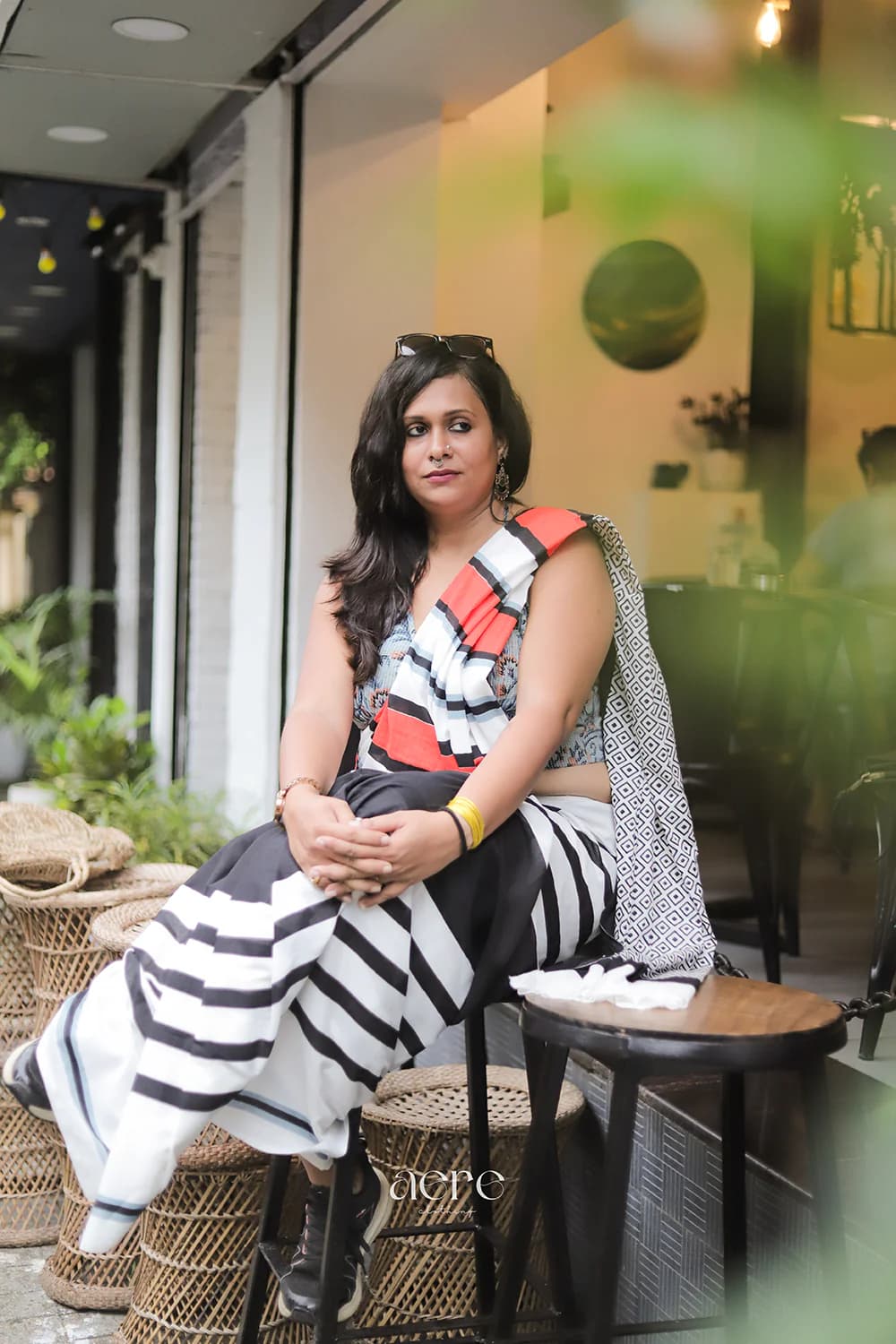

How AERE CLOTHING's Most Unexpected Product Went Viral on Meta — and Doubled Monthly Revenue in Its First Full Month of Paid Ads
Beautiful clothing. Original jewelry. One founder running everything from half a bedroom. And a paid advertising history defined by one word: frustrated. When Oindrila Bhol onboarded with Arlox in December 2025, her description of the previous agency's work was precise: "Consistent drops on performance, no clear vision, not performing as promised and also excuses on bad performances." What she didn't yet know was that the product most likely to break that pattern wasn't the one she'd built her brand around. Aere Clothing & Jewellery had sarees, blouses, and handmade ethnic clothing — everything a D2C fashion brand needs to establish itself. What the data found was a single Afghani neckpiece called the Noorjahan. Within 45 days of going live, that neckpiece had set an all-time daily revenue record of ₹20,500, driven 125 dispatch pieces in a single week, attracted a bulk prepaid order of 20 pieces, and forced Oindrila's supplier to start manufacturing entirely new designs to keep up with demand. January 2026 closed at ₹2.85 lacs. The previous month had been ₹1.2 lacs.
BRAND SNAPSHOT
Industry: D2C fashion and jewelry (India)
Category: Clothing (sarees, blouses, stitched clothing, tissue sarees) + Jewelry (Afghani/Tibetan neckpieces, bracelets, rings)
Geography: India (pan-India distribution)
Stage: ₹1.2 lacs/month → ₹2.85 lacs/month in January 2026
Team at launch: Founder only — sole operator across all functions
Services: Meta Ads Strategy, Audience Architecture, Creative Angle Development, COD/RTO Management, CRO Consultation, Retargeting
THE PROBLEM
Aere Clothing & Jewellery Pvt Ltd was, on paper, a brand with everything it needed: a product range that spanned premium ethnic wear and handmade jewelry, a founder who understood both the creative and technical dimensions of her business (data analysis confidence: 9 out of 10), and a vision that was concrete — "scale my brand from half of my bedroom to a well-established brand and office."
What it didn't have was a paid advertising partner who had delivered on that vision.
At onboarding in December 2025, Oindrila described her feelings toward marketing in one word: frustrated. The elaboration was direct. The previous agency gave her "consistent drops on performance, no clear vision, not performing as promised and also excuses on bad performances." Her assessment of their capability: "Felt they have lack of basic knowledge on the subject matter."
The brand was generating ₹1.2 lacs per month at approximately 3X ROAS — a baseline that showed the product could sell, but no sign of the systematic growth infrastructure that would let it scale. Return-to-origin rate was 35%, creating both cash flow risk and a persistent drag on the pixel's ability to accumulate clean purchase signal. Fulfillment ran 5–7 days. And behind all of it was a single founder managing product, content, operations, customer service, and logistics — alone.
The goal Oindrila set at onboarding was not abstract: make Aere a known brand, reach foreign markets, and build toward a business with a real office and real people in it. She was starting from ₹1.2 lacs and half a bedroom.
WHY IT WAS HAPPENING
The advertising account had never been built around a tested product hierarchy. Aere was a clothing brand with jewelry as a secondary category — at least, that was how the brand was positioned. No one had tested whether that positioning matched what buyers actually wanted. The assumption was that sarees and ethnic clothing should lead. The data, once live, said something different.
A 35% return-to-origin rate was corrupting both cash flow and audience signal. High RTO in India's COD-heavy D2C environment isn't just a logistics problem — it's an algorithm problem. Every returned COD order that never converted fed bad signal into Meta's optimisation engine. With a 35% RTO rate and no COD management strategy, a significant portion of the ad account's purchase data was coming from customers who would never actually pay. The algorithm was learning from the wrong buyers.
The previous agency left no infrastructure to build on. There was no audience architecture, no structured campaign testing, no creative system, and no performance accountability. What existed were ads that had occasionally worked and a founder who had personally observed that "the few times they had run paid ads, they made more than they spent" — but no mechanism to turn that intermittent result into a reliable one.
Content production was bottlenecked at the founder. Oindrila was the brand's sole content creator — she shot, edited, and shared everything herself. For a brand where creative freshness directly affects conversion rate, this created a structural vulnerability: every gap in content output was a gap in the ability to test new angles. With no team, no agency-side creative production, and a founder simultaneously managing fulfillment and customer service, the pipeline was fragile by design.
CRO gaps were treated as prerequisites rather than parallel tasks. At onboarding, the website had several known conversion rate issues: no floating add-to-cart, no dropdown navigation, no pincode availability check. A reasonable assumption would be to fix these before launching paid traffic. That assumption would have delayed the launch by weeks — and in D2C, delay is cost.
THE SOLUTION
Mythos — Creative Advantage:
The first creative principle was pragmatic: launch with what exists and improve in parallel. The CRO gaps that existed on December 15, 2025 — the floating add-to-cart, the dropdown menu, the pincode check — were logged, communicated, and addressed while the campaigns ran, not before. The pixel needed real purchase data. Waiting for a perfect website would have delayed the signal accumulation by weeks.
The second principle emerged from the data within weeks. When the campaign's catalog started running across both clothing and jewelry, the pattern in abandoned checkouts and actual orders diverged in a direction no pre-campaign planning would have predicted. Oindrila noticed it herself and flagged it on January 4: "In abandoned checkout there are more of saree orders than jewelry. Means jewelry are getting converted more." Sarees were getting attention. Jewelry was closing. The creative strategy pivoted toward jewelry — specifically the three products the data identified as the account's top converters: the Noorjahan Afghani Neckpiece, the Zarina Mosaic Charm Bracelets, and the Amara Ring.
Product-specific creative briefs were built around these three items, with detailed format guidance — video concepts, styling angles, and content scripts — provided to Oindrila for her to shoot herself. The team identified "founder-led" video content as a priority format: a sole founder who is also the creative force behind the brand is an asset, not a limitation, in D2C content. That founder presence became the creative engine for the account's best-performing ads.
When Valentine's season approached in February, the team aligned a campaign and offer structure around the gifting moment — a bundle offer across the top four viral jewelry items, organic Instagram Reels planned alongside paid amplification, and a "Valentine Special Bundle" header added to the site.
Sentinel — Scientific Media Buying:
The first media buying decision was COD management. With a 35% historical RTO rate, running full COD on a new ad account would have meant feeding bad purchase signal into a learning algorithm from day one. Partial COD was activated immediately for high-risk customers — a ₹99 charge structure (revised down from ₹150) that filtered for intent without eliminating COD orders entirely. A 10% prepaid discount for first-time buyers was implemented through Razorpay Magic Checkout to actively push the conversion mix toward committed purchasers.
The second decision was the performance measurement framework. In October 2025, Meta released its GEM update, which materially changed how the platform's dashboard attributed purchases. The standard dashboard ROAS became unreliable — it over-reported on broad-budget campaigns and under-reported on campaigns driving traffic that converted later. The team switched to blended ROAS — total Shopify revenue divided by total Meta spend — as the operational north star. When Oindrila pointed to a discrepancy of 55–70 orders between Meta's dashboard count and Shopify's actual order count, the explanation was direct: Meta's updated attribution model was the cause, not a campaign error. Every performance review was anchored to Shopify data, not Meta numbers.
Budget was managed against a ₹70–75K monthly constraint. When spend drifted above that threshold — as it did in early January due to overlapping campaign billing cycles — the team communicated directly and recalibrated. The spending limit reset in early January was explained as a technical necessity to prevent ads from pausing abruptly, not a budget increase decision made without the founder's knowledge.
By January 12, the account had generated ₹1.55 lacs in Shopify revenue against ₹75K in total spend across the first 28 days since campaign launch. Within January's calendar month alone, mid-month tracking showed ₹89K in revenue at 2.9X ROAS — improving from the blended 2.07X of the launch period as the algorithm's purchase signal grew cleaner and the creative shifted toward higher-converting jewelry products.
January 2026 closed at ₹2.85 lacs.
Vault — Brand Value Engine:
Aere's brand identity was not a constraint to work around — it was the asset to amplify. The handmade Afghani and Tibetan jewelry had a visual distinctiveness that produced strong creative hook rates. The Noorjahan Neckpiece's specific cultural provenance — Afghani design, handcrafted, with a name that carried its own narrative weight — was part of why it performed the way it did. The creative strategy didn't abstract that identity into generic jewelry ads. It pointed directly at what made the product specific.
When the Noorjahan went viral — "It was beyond my wildest imagination that this necklace will go this viral," Oindrila wrote in February — the operational consequence was a stock crisis. The product had gone to -27 units in inventory before the manufacturing pipeline could catch up. Oindrila communicated the delay to customers directly rather than removing the listing. She managed expectations while orders continued coming. By the time the stock was resolved, she was dispatching 125 pieces in a single week.
The demand shock had a downstream effect the brand hadn't anticipated: Oindrila's supplier, seeing the scale of Afghani-style jewelry orders, came to her proactively. "My supplier only offered that she will make new design for me as the sell of afghani pieces are crazy and this style is not much available in the market." The Noorjahan campaign had not just driven revenue — it had changed the supplier relationship, giving Aere a product development advantage and the beginning of a differentiated catalog position that competitors couldn't replicate.
THE RESULTS
₹1.2 lacs/month → ₹2.85 lacs in January 2026 — first full calendar month of paid advertising
₹20,500 in a single day — all-time daily revenue record, January 8, 2026
₹1.55 lacs revenue in first 28 days — December 15, 2025 to January 12, 2026, on ₹75K in ad spend
2.9X ROAS mid-January — improving from 2.07X blended across the launch period
125 Noorjahan Afghani Neckpieces dispatched in one week — February 2026, following viral campaign
Bulk prepaid order: 20 pieces across 4 viral jewelry items — 5 pieces each, first large B2B-style order
RTO reduced from 35% to remarkably reduced — following partial COD implementation and audience quality shift
Supplier initiated new product development — Afghani neckpiece demand drove supplier to design new exclusive pieces for Aere
LESSONS FOR SIMILAR BRANDS
"Our core clothing range should lead our paid advertising." Aere was a clothing brand. The sarees, blouses, and handmade ethnic wear were the brand's identity. But the data from the live account was unambiguous: abandoned checkouts skewed toward sarees; orders skewed toward jewelry. Specifically toward the Noorjahan Afghani Neckpiece. Following that signal — building the creative strategy around what was actually converting rather than what was "supposed to" convert — produced the account's first all-time daily revenue record and a monthly revenue figure that nearly doubled the brand's pre-Arlox baseline. For D2C brands with multiple categories, the product that defines the brand's story is not always the product that defines its acquisition engine. The data determines that — not the founder's intuition or the homepage hierarchy.
"With 35% RTO, paid ads aren't viable for us." High return-to-origin in India's COD-heavy market is real and serious — it corrupts pixel signal, drains cash flow, and creates fulfilment overhead. But the root cause is usually a targeting and payment configuration problem, not a product or market problem. Partial COD for high-risk customers, a modest COD charge that filtered for intent, and a prepaid incentive for first-time buyers shifted the conversion mix toward buyers who actually paid. By February, Oindrila reported that RTO had "reduced remarkably" and cancellations had become "very few real" cases. RTO was a system problem. The system was fixable.
"We should solve the website before we spend on ads." At launch on December 15, Aere's website had known CRO gaps — the floating add-to-cart was not yet live, the dropdown navigation was incomplete, the pincode check was pending. The conventional answer would be to fix all of it first. Instead, the campaigns launched within the constraints that existed on that day. CRO improvements were made in parallel, tracked, and completed over the following two weeks. By the time the Noorjahan creative was hitting peak performance, the most important website optimisations were already in place. Waiting would have cost weeks of pixel learning time at the exact moment the account needed to be accumulating clean purchase signal.
CHALLENGES WE FACED
The first three days after launch produced zero orders from the new campaigns. Ads went live on December 15. By December 18, Oindrila's message was direct: "We still did not get a single sale from the new ad." For a founder who had already been through one disappointing agency experience and was running the business alone on tight cash flow, three silent days were not a learning phase — they were a threat to her confidence in the entire engagement. The account was in the algorithm's cold-start period. By December 22, momentum had started: "From yesterday's abundant cart most of them have placed order. New ad is finally getting orders." Getting through those first three days required clear communication, not reassurance.
The Noorjahan Neckpiece created a supply chain crisis. Viral performance at the ad account level became a stock management emergency at the operations level. The product went to -27 units in inventory — meaning orders were coming in for a product that physically didn't exist in sufficient quantity yet. Oindrila managed this by keeping the listing live, communicating delays to customers directly, and accelerating manufacturing. By February, she was dispatching 125 pieces in a single week. The stock problem was, in every meaningful sense, a good problem to have — but it required founder bandwidth at exactly the moment the account was generating its highest-ever daily revenues.
Meta's dashboard reported 55–70 more orders than Shopify showed. Following Meta's GEM update in October 2025, the platform's attribution model changed in a way that over-counted purchase events in the dashboard relative to Shopify's actual order records. Oindrila flagged the discrepancy directly: "Original order number is 221 and Meta shown 241+35=276. Huge difference almost 20%." The concern was reasonable — if Meta thought it was performing better than it was, it would overspend toward a false signal. The team's response anchored everything to Shopify blended ROAS and explained the attribution gap clearly. But the ongoing discrepancy between two sets of numbers in front of the same founder required continuous explanation.
Budget management created recurring tension. The agreed monthly budget was ₹70–75K. Across December and January, the total spend drifted above that ceiling on multiple occasions — not from deliberate budget increases, but from the billing mechanics of running multiple parallel campaigns, each with its own billing threshold. Oindrila surfaced this as a trust issue more than once: "We have already spent more than what we have decided to spend these 30 days." The lesson — that real-time, geography-by-geography spend summaries broken out by campaign should have been a standard weekly deliverable — was learned the hard way during the engagement.
BELIEFS CHANGED
"The product that defines the brand is the product that should lead the ads." Sarees and handmade ethnic clothing were Aere's founding identity — and they remained the brand's primary product category on the website. But the paid acquisition engine didn't care about founding identity. It cared about what converted. Jewelry — specifically one Afghani neckpiece — was the conversion anchor that produced the first all-time daily revenue record, the first bulk prepaid order, and a supplier relationship that began producing exclusive new designs for Aere. The brand's story and the brand's acquisition engine pointed in different directions. The acquisition engine had to lead.
"A one-person brand cannot scale systematically." Oindrila ran every function in the business alone — product sourcing, content creation, order management, customer service, fulfillment coordination, and live feedback on ad creative. She called abandoned checkout customers directly when she had time. She shot creative content on her phone. She managed the Noorjahan stock crisis while simultaneously handling 125 dispatch pieces in a week. None of this is a template for a scalable operation. But the systematic campaign architecture — partial COD automation, retargeting sequences, product-specific ad sets, blended ROAS tracking — gave those solo efforts enough leverage to nearly double monthly revenue in the first full month of paid advertising. Structure and a single founder were sufficient to produce 2.38X revenue growth. It wasn't comfortable. It worked.
Want results like Aere Clothing?
Let's Scale Your Brand Next
Book a free strategy call and discover how we can help you hit your next revenue milestone.
Book a Call
Oindrila Bhol
Founder
Before
1.2L MRR
After
₹2.85L MRR
Timeline:1 Month
Category:Fashion